
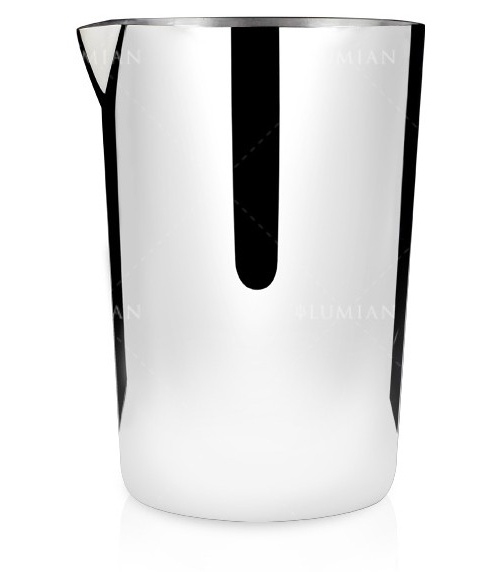

The stainless steel mixing tin in two lines
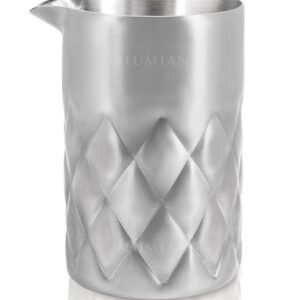
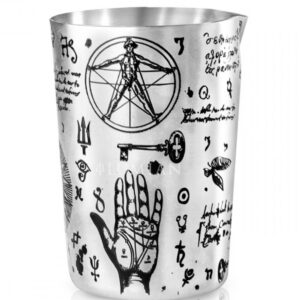
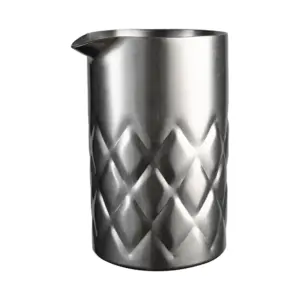
This is the Lumian mixing tin: the vessel for stirred drinks in stainless steel, with a wall thick enough to hold the temperature and a balanced spout that gives the line of pour.
Who it is for
For anyone stirring a lot who does not want to think about breakage. Steel lets you work without the caution glass imposes, and that changes the rhythm of a station turning out dozens of drinks a night.
Steel instead of glass: what you gain
You gain insulation and toughness. Metal chills fast and then stays cold, so dilution stays inside the limits of the spec even when the service slows down; and a vessel that falls does not break, which on a crowded bar is a concrete advantage. What you lose is the view: inside a stainless steel mixing tin you see neither the ice turning nor the frost rising, and the signal that the temperature has been reached has to be read outside, where condensation forms anyway.


Specifications
- Material: stainless steel
- Wall: thick, to hold the temperature
- Spout: balanced, for a continuous pour
- Use: stirred and strained
- Dishwasher safe: yes, bare stainless steel
The technique does not change
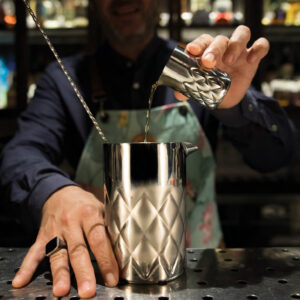
Ice up to two thirds of the height, ingredients after, spoon turning the block against the wall with the bowl kept in contact. The finishing reference here is the frost forming on the outside of the metal: it arrives sooner than on a glass vessel, because steel conducts better, and it should still be waited for, because it is the sign the liquid inside has come down in temperature.
The balanced spout
This is the part that separates a stirring vessel from a plain metal cup. A rim with a formed spout collects the liquid and lets it out in a narrow, continuous line, so you can pour into a glass that is already garnished without wetting the rim. Without one the liquid spreads across the rim and falls where it lands, and on coupes the result shows at once.
The right ice
Large, dry cubes. Small ice has a lot of surface, melts before the liquid has come down in temperature and brings water into the drink when it is not yet wanted; cubes straight out of the well carry a film of water that goes into the vessel before the first turn of the spoon. In a stainless steel mixing tin, where you cannot see what is happening, both details count for even more, because you cannot correct by eye.
When steel is the better choice
In table service, where the vessel is not seen; in fast work, where toughness matters more than the show; and when you leave the venue, because a mixing tin in a bag is no trouble while a glass piece is. Behind a bar on show with a list of classics, plenty of people stay with glass for exactly the opposite reason.
Care
Dishwasher safe, it is bare stainless steel. Dry it to avoid limescale marks, which show on polished metal more than on glass, and check the edge of the spout now and then: it is the thin part, and it is the one that deforms if the vessel falls on that side.
FAQ
What does steel give over glass? It holds the temperature better and it does not break; in exchange you cannot see what is going on inside.
How much ice goes in? Up to two thirds of the height, before the ingredients.
How do you know the drink is ready? From the frost forming on the outside of the metal.
Is it dishwasher safe? Yes, it is stainless steel: it only wants drying to avoid marks.
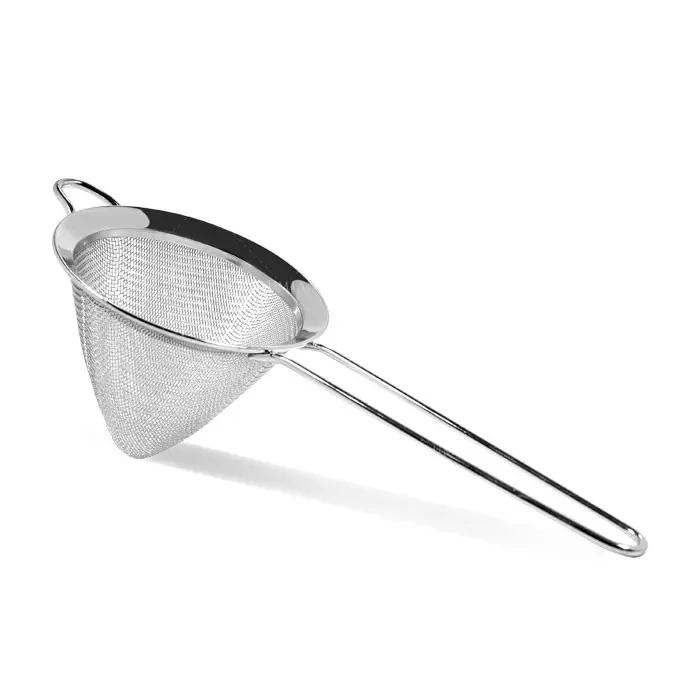
Is a strainer still needed? Yes: the spout gives the line of pour but it does not hold the ice back.
The more you buy, the less you pay: 4 pieces -5%, 6 -7%, 8 -10%, on the same item.
Dispatched from Rome, Italy. 15-day returns, free of charge. Questions before you order? Message us on WhatsApp on +39 351 929 6937.
The other models, in glass and in steel, are in the mixing glass category.






Reviews
There are no reviews yet.