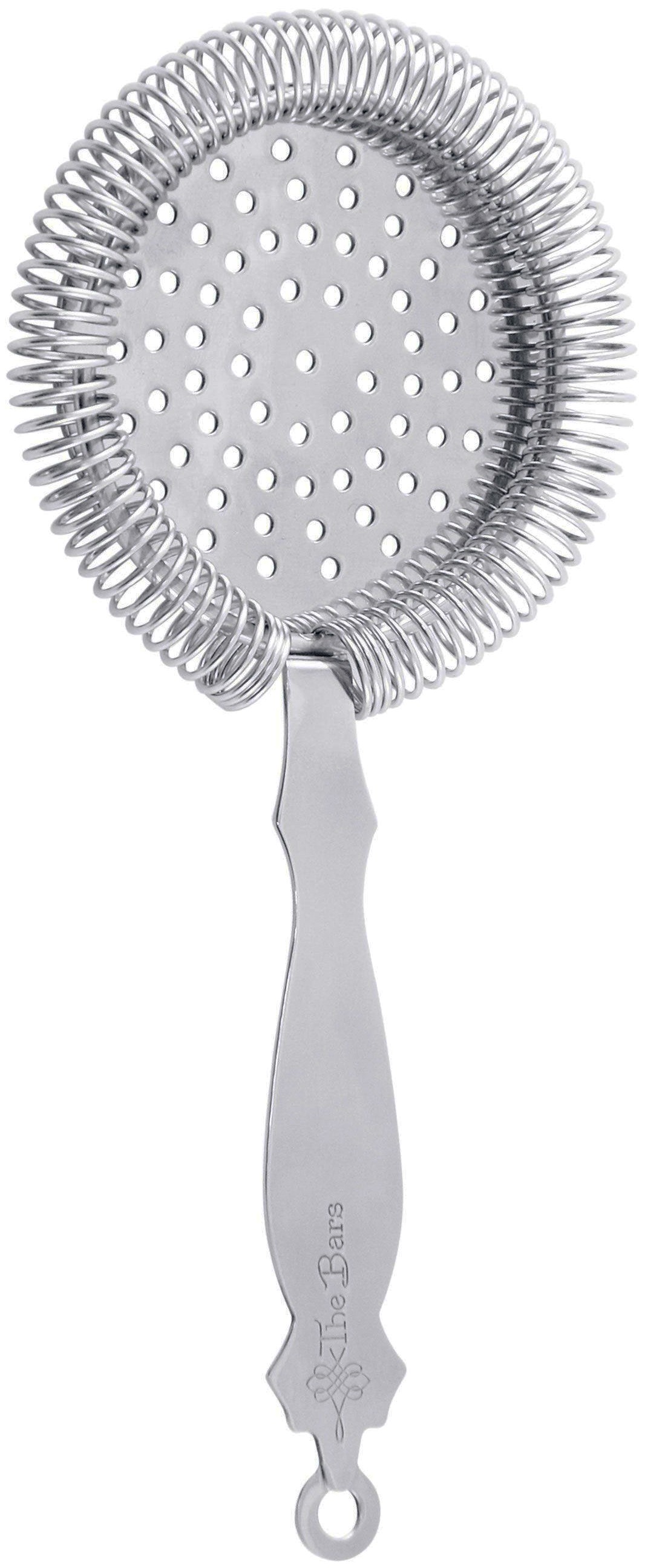
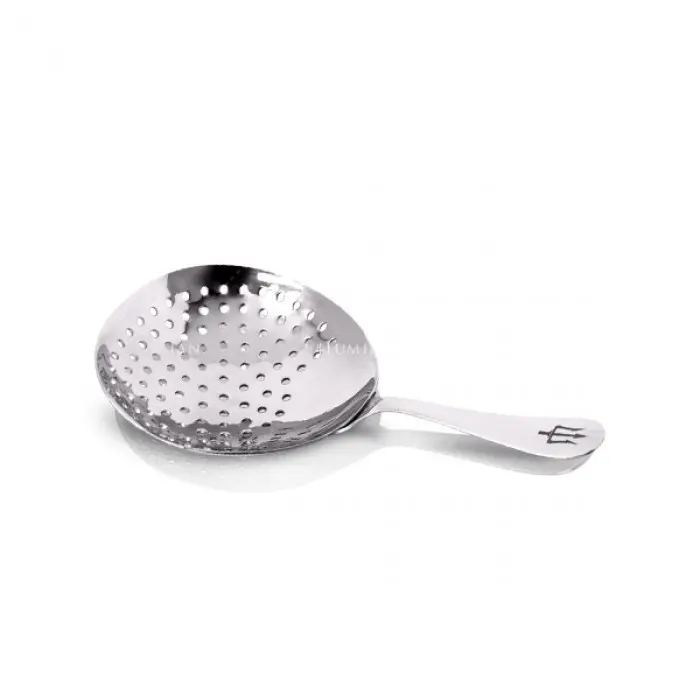
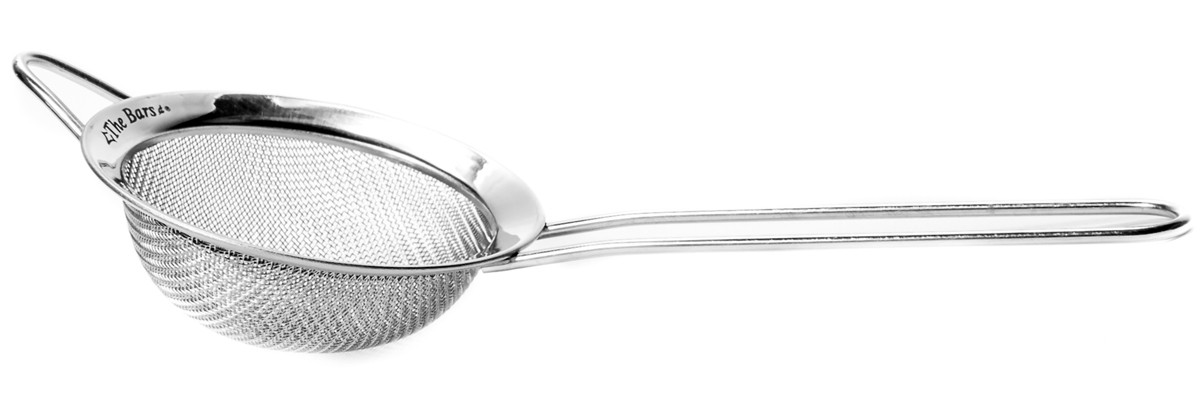
Straining well is half the job. Here are the three strainers of the bartender: the hawthorne with its spring for the shaker, the julep for drinks stirred in the mixing glass, and the fine mesh strainer for the fine strain that gives a drink a silky texture. All in stainless steel. Below, the guide to working out which one you need.
The ice stays in the tin, the drink goes in the glass. Put like that it sounds obvious, but how you strain decides the clarity, the texture and the temperature of what you serve. A well-equipped bartender does not have one strainer but three, and knows when to use each. They cost little, but the wrong one shows in every sip.
Hawthorne: the shaker strainer
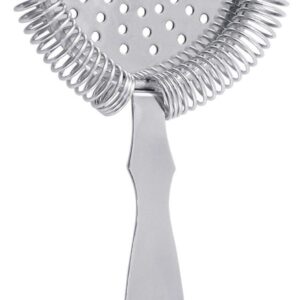
This is the strainer with the coiled spring round the edge. The spring holds back ice and solids and fits the mouth of the tin. The detail that matters is the spring tension: the tighter the coil, the finer the strain and the more control you have when you set the gap with a finger. It goes on the Boston shaker, which has no built-in strainer.
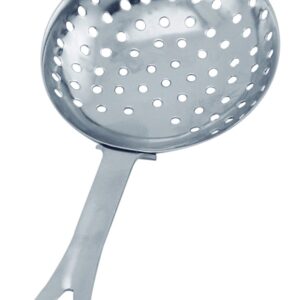
Julep: the mixing glass strainer
This is the perforated bowl, with no spring. Created for juleps served over crushed ice, it is now the standard tool for stirred drinks: set it inside the mixing glass, hold it with the forefinger and pour while it holds back the cubes. A clean movement that suits an open bar counter.
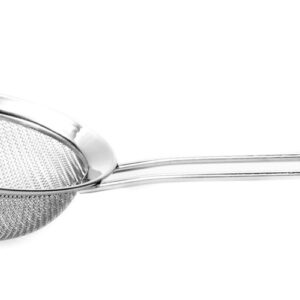
Fine strainer: the second strain
The fine mesh, usually conical, is used to fine strain (double strain). You strain once with the Hawthorne from the tin, then pass the liquid through the mesh as you pour. It holds back ice chips and bits of herb or citrus, and the drink reaches the glass with a silky texture and nothing floating in it. It is the step that marks a carefully made cocktail.
Type
Used with
Holds back
Hawthorne (with spring)
Boston shaker
Ice and large solids
Julep (perforated bowl)
Mixing glass, stirred drinks
Ice cubes
Fine strainer
Fine straining, after the Hawthorne
Ice chips and fine bits
Pieces to put on show
The Hawthorne Strainer is the fixed partner of the Boston shaker: a spring that fits the tin and fine control of the gap with one finger.
The Lumian Julep Strainer is the bowl strainer for stirred drinks: it sits in the mixing glass and holds back the cubes with a clean movement.
The Fine Strainer completes the set for fine straining: it holds back chips and fine bits and gives the cocktail the silky texture guests notice.
What is the difference between a Hawthorne and a julep strainer?
The Hawthorne has a coiled spring round the edge and goes on the Boston shaker to hold back ice and solids. The julep is a perforated bowl with no spring, made for stirred drinks in the mixing glass. They work together, not instead of each other.
What is fine straining, or double straining?
You strain the cocktail once with the Hawthorne from the tin, then a second time through a fine mesh strainer as you pour. It holds back ice chips and bits, giving the drink a silky, clear texture.
Which strainer goes with a Boston shaker?
The Hawthorne strainer, because the Boston has no built-in strainer. The Hawthorne spring fits the mouth of the tin and lets you set the gap with a finger.
What does the spring on a Hawthorne strainer do?
The coiled spring holds back ice and solids and fits the mouth of the tin. The tighter the coil, the finer the strain and the more control you have over the gap as you pour.
What material should a professional strainer be?
18/10 stainless steel, like the rest of the bar tools: it resists acids, holds no odours and sanitises easily. It is the standard for constant professional use.

 StrainersAdd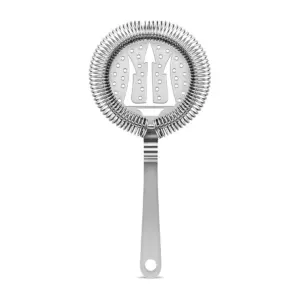
 Molecular AccessoriesAdd
 Bar ToolsOptions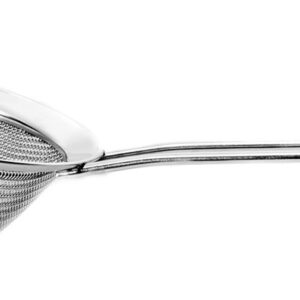
 StrainersOptions