
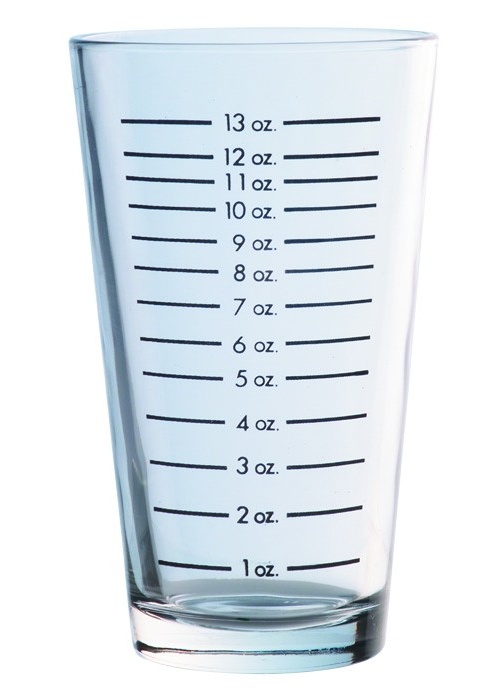

The graduated mixing glass in two lines
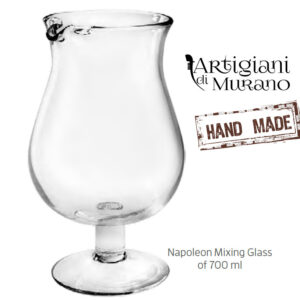
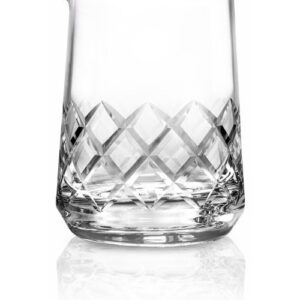
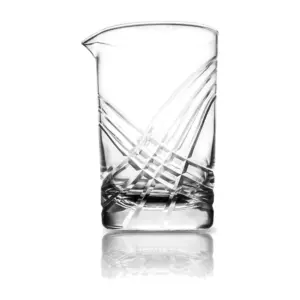
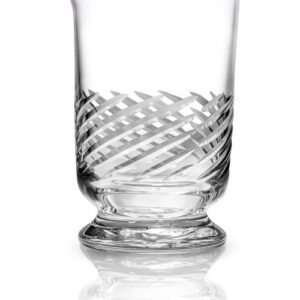
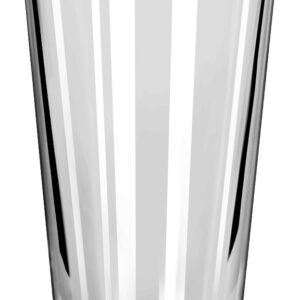
This is the graduated mixing glass: the same glass vessel used for stirred drinks, with measuring markings on the body. It is 11 x 17 x 11 centimetres and weighs half a kilo.
Who it is for
For anyone building in batches and anyone working alone. The markings let you pour straight into the vessel and read the level, which saves one step for every ingredient: on a four part drink that is four fewer movements.
Measuring in the vessel, and when it makes sense
It makes sense when you are building several identical drinks together, because reading one high level is more accurate than four consecutive pours through a jigger, and because the ice goes in afterwards. It makes less sense on a single precision cocktail, where the jigger stays more reliable: the markings on a graduated mixing glass are drawn for stirring volumes, not for the two or three millilitres of a bitter.


Specifications
- Material: glass with measuring markings
- Dimensions: 11 x 17 x 11cm
- Weight: 0.5kg
- Used with: bar spoon and strainer
- Dishwasher safe: yes, without abrasives
How to read a marking without getting it wrong
With the vessel standing on the counter and your eye level with the liquid, not looking down. From above you always read a higher figure than the true one, and that is the error that makes people pour short without noticing. It is the same precaution used with laboratory cylinders, and it counts for even more on thick glass, where the wall exaggerates the distortion.
The rest is a mixing glass like any other
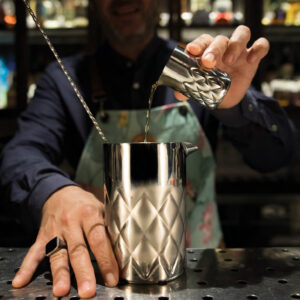
Ice up to two thirds, ingredients after, spoon turning the block against the wall, frost on the outside as the signal that the temperature is there. The markings do not change the technique: they only change how many tools it takes to get there, which is why this model often ends up on small stations, where one fewer object on the counter is space gained.
The markings and the ice
There is an order worth keeping: measure the liquids by reading the markings first, then add the ice. Do it the other way round and the level rises with the volume of the cubes, and the reading is worth nothing. It is the mistake everyone makes in the first week with a graduated mixing glass, and it gets corrected once: liquids, reading, ice, spoon.
Batching, which is the best use
Building four Negronis together in a graduated mixing glass is faster and more consistent than making them one by one: you read the level at each ingredient, stir once and pour into four glasses already set with ice. It is the technique that saves a service when a table order comes in, and the markings are what make it possible without doing sums.
Care
Dishwasher safe, loaded with space around it. The printed markings are the part that wears: treat them as decoration, so no scouring pads and no abrasive products, or after a few months you will still have the vessel but not the numbers.
FAQ
What are the markings for? Measuring straight into the vessel, without going through the jigger for every ingredient.
Is it as accurate as a jigger? On stirring volumes yes; for very small doses the measure is still better.
What size is it? Eleven centimetres across by seventeen tall.
How do you read the level? With the vessel on the counter and your eye level with the marking, not from above.
Is it dishwasher safe? Yes, but without abrasives: the printed markings wear.
The more you buy, the less you pay: 4 pieces -5%, 6 -7%, 8 -10%, on the same item.
Dispatched from Rome, Italy. 15-day returns, free of charge. Questions before you order? Message us on WhatsApp on +39 351 929 6937.
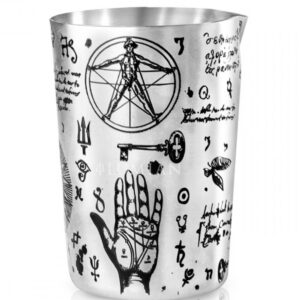
The other models, in glass and in steel, are in the mixing glass category.







Reviews
There are no reviews yet.