
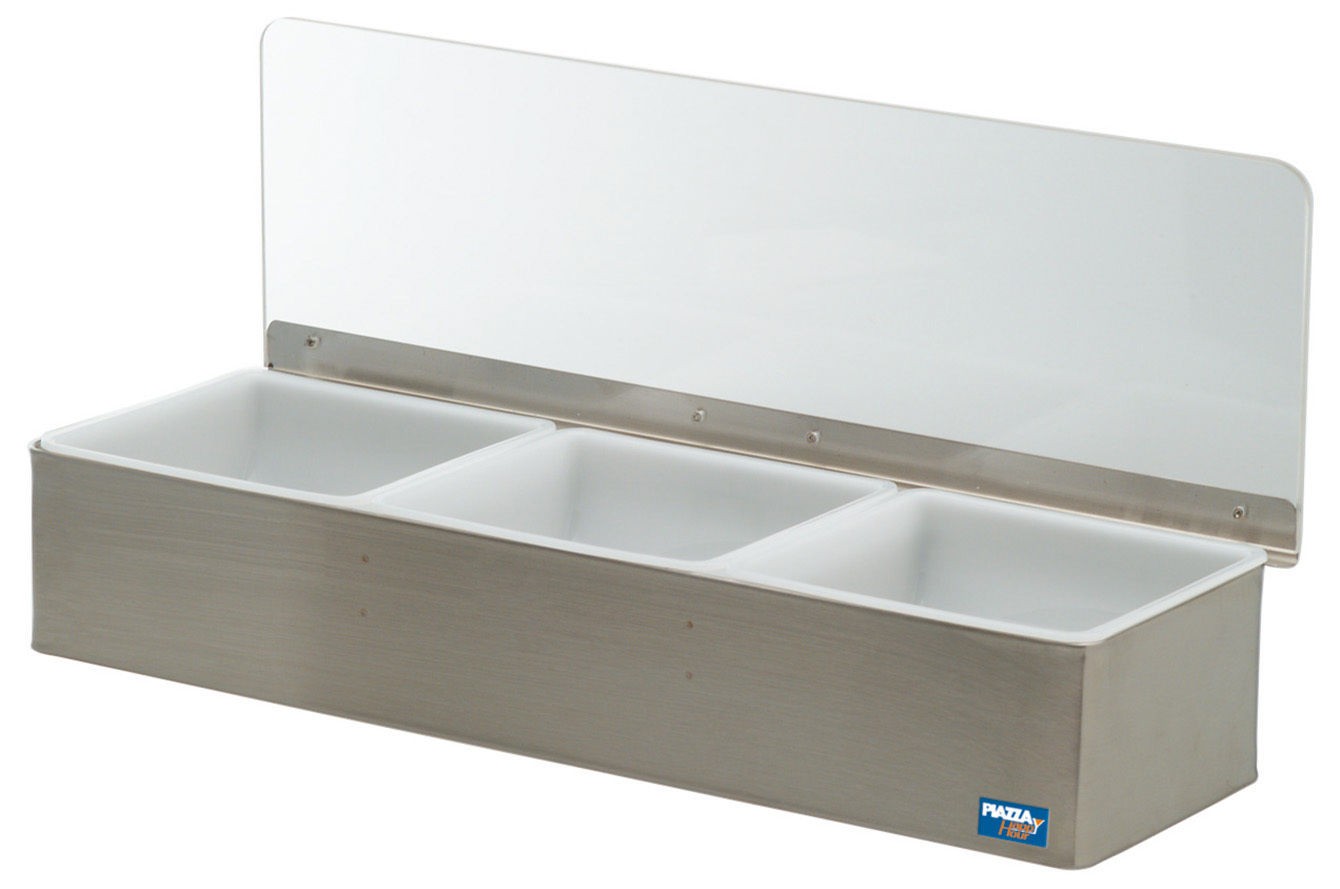

The three compartment condiment holder in two lines
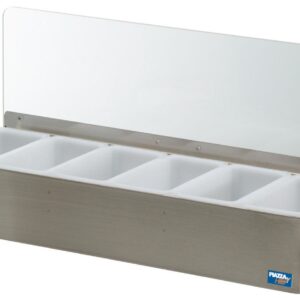
A steel condiment holder with a lid: 450mm long and 90mm high, which is the profile that stays under the line of sight.
Who it is for
For anyone keeping it on the front of the bar, in view of the guest. Ninety millimetres is the height that lets you see over it while working from the other side.
The low profile is the reason it exists
A tall container on the front of the bar separates the person building from the person watching, and on an open bar that separation costs more than any convenience: half the value of an open bar lies in the guest seeing the hands work. With this holder the line of sight stays clear, and the container becomes part of the counter instead of a barrier.


Specifications
- Compartments: 3
- Material: steel
- Length: 450mm
- Width: 150mm
- Height: 90mm
- Supplied with: lid
Three compartments or six
Three are enough for lime, lemon and olives, and they leave the compartments wide. Six suit anyone keeping more garnishes ready, at the same external footprint and therefore with narrower compartments. The choice follows the garnishes you actually use, not the ones you might: a full three compartment holder pays better than a half empty six.
Why steel on a fruit container
Because it is in contact with acids all day. Lime and lemon juice attack porous materials and stain them, while on steel they run off and wipe away in one pass. There is a reason of appearance too: on a front of house position steel says professional equipment, which is exactly the message an open bar wants to send.
Wide compartments, and what changes
Slices come out with one hand. In a wide compartment orange wheels and lime slices sit stacked and pull out from the top; in a narrow one they go in on edge and it takes two fingers to get one out. Across two hundred drinks that is the difference between one gesture and one and a half, and it is why anyone garnishing with slices prefers three compartments.
The lid, and when it really earns its keep
In the breaks and whenever the container is left unattended. On the front of the bar it does one more, less technical job: an open container in front of a guest is an invitation to help themselves, and not everyone resists. Closing it between orders is a rule that in some venues matters more than keeping the dust off.
The lid that becomes a surface
On a low model there is a useful side effect: closed, the lid is a surface at bar height to rest a glass or a pair of tongs on for a moment. On a tall container that same surface sits at 170mm and is no use to anyone. It is the kind of advantage nobody puts on a spec sheet and everyone finds after a week.
Care
Compartments, lid and base washed every evening. No common steel wool on stainless, which leaves particles that go on to rust and look like a fault in the container. Dry before reassembling, because water sitting under the compartments is what brings the smell.
FAQ
How tall is it? Ninety millimetres, which is the profile that builds no wall.
How long is it? Four hundred and fifty millimetres, by 150 wide.
Are three compartments enough? For lime, lemon and olives yes, and they are wider than those on a six.
Why steel? Because it takes citrus acids and wipes clean in one pass.
Does it have a lid? Yes, and it helps because an open container on the front invites people to help themselves.
Do the compartments come out? Yes, and they go in the fridge at the end of service.
The more you buy, the less you pay: 4 pieces -5%, 6 -7%, 8 -10%, on the same item.
Dispatched from Rome, Italy. 15-day returns, free of charge. Questions before you order? Message us on WhatsApp on +39 351 929 6937.
The other holders are in the bar condiment category.

Reviews
There are no reviews yet.