
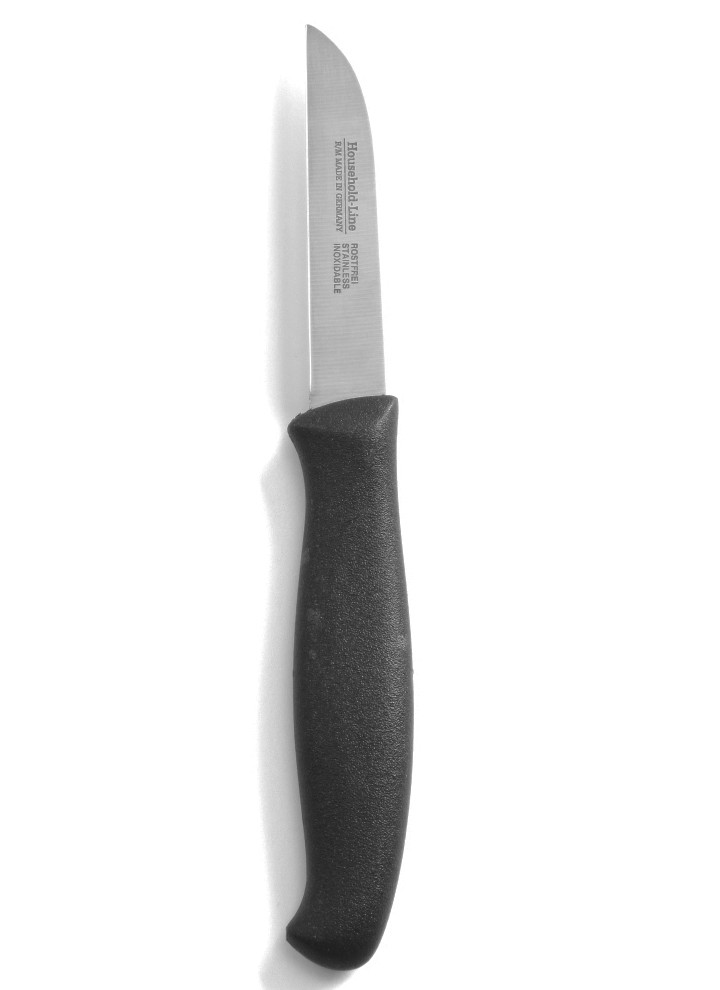

The paring knife in two lines
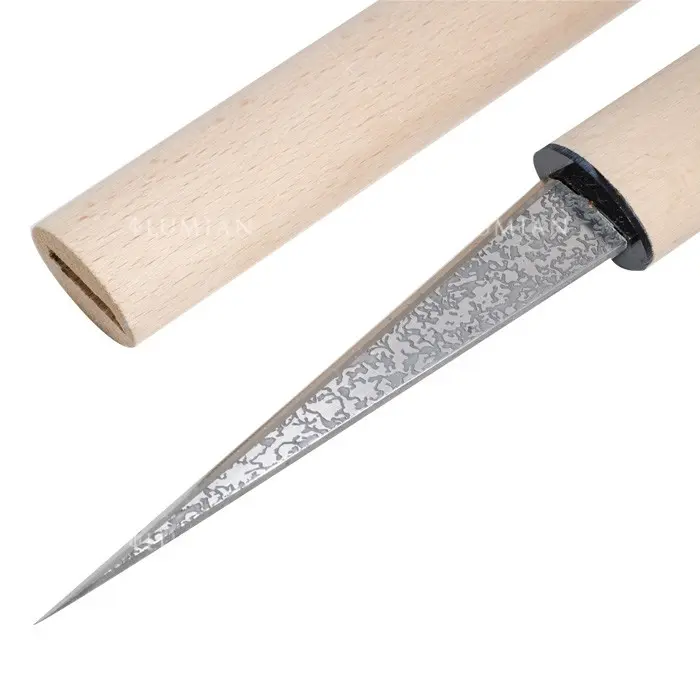
This is a paring knife with a straight stainless steel blade and a black handle, 22cm long overall: the short knife for peeling, trimming and cutting before service.
Who it is for
For bartenders who prep fruit before opening. It does no special garnish work; it does the basic job: wheels, wedges, half wheels and the fruit for the evening’s garnishes.
The short blade is the point
On a long knife the tip is far from the hand, so control over small cuts is lost. With a blade of around ten centimetres the wrist guides the tip directly, which is what you need when cutting half wheels of lime or splitting a strawberry. A paring knife is not a scaled-down kitchen knife: it is a tool for precision work with a steady hand.


Specifications
- Type: paring knife, straight blade
- Blade material: stainless steel
- Handle: black
- Dimensions: 22 x 2 x 1cm
- Dishwasher safe: no, hand wash only
Straight or curved
A straight blade works on the board, pressing down; a curved one works in the hand, following the shape of the fruit. If you mostly cut citrus wheels on the board, take the straight blade, which is this one; if you peel with the fruit in your hand, a curved blade is less tiring, because the cut follows the curve instead of fighting it. It is the first question to ask, and it depends on the gesture, not the product.
The lightest knife at the station
That matters more than it seems. A light tool is picked up and put down dozens of times during prep without tiring the wrist, and over half an hour of fruit to cut, fatigue is what makes the cuts worse towards the end. 22cm overall, handle included, is the size that fits in a closed hand.
What really gets cut before service
Citrus wheels and wedges, which is most of it. Halved strawberries, pineapple triangles, apple slices for autumn drinks, cucumber ribbons. The paring knife covers all of this; what it does not do is twists, which need a peeler or a zester, or large cuts on big fruit, which need a longer blade.
The edge, and how to keep it
A knife that crushes fruit instead of cutting it is not necessarily blunt: often it is just coated in dried sugar and juice. If it still cuts poorly after a wash, the edge has gone and needs honing. Storing it loose in a drawer with other metal is the quickest way to spoil it, because knocks between blades dull an edge more than use does.
Care
Hand wash and dry straight away: citrus acid left on the steel attacks it, and trapped moisture at the join between blade and handle is where every problem starts. No dishwasher, where harsh detergents and heat wear the edge faster than use.
FAQ
What is the paring knife for? Peeling, trimming and cutting fruit before service.
How long is it? 22cm overall, handle included.
Straight or curved? A straight blade works on the board, a curved one in the hand, following the shape of the fruit.
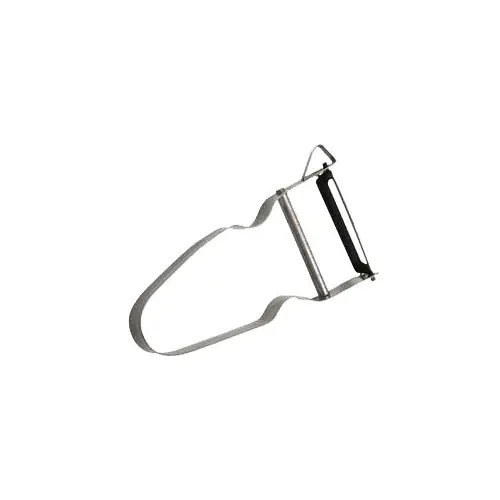
Does it cut twists? No: for those you need a peeler or a zester.
Is it dishwasher safe? Better not: heat and harsh detergents wear the edge.
Why does it sometimes crush the fruit? Often it is coated in dried sugar, not blunt: wash it and try again.
The more you buy, the less you pay: 4 pieces -5%, 6 -7%, 8 -10%, on the same item.
Dispatched from Rome, Italy. 15-day returns, free of charge. Questions before you order? Message us on WhatsApp on +39 351 929 6937.
The other cutting tools are in the chopping boards and knives category.



Reviews
There are no reviews yet.