

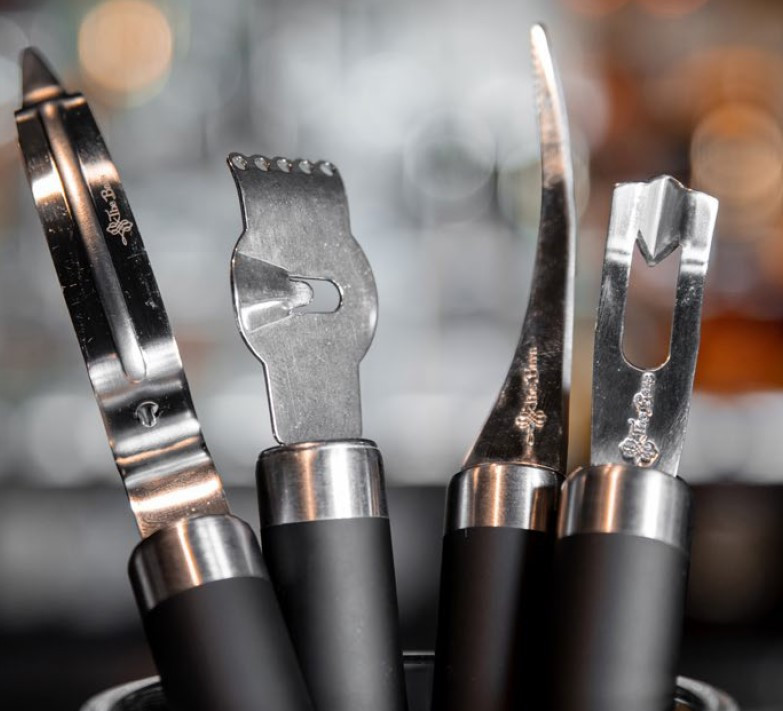

The citrus peeler in two lines
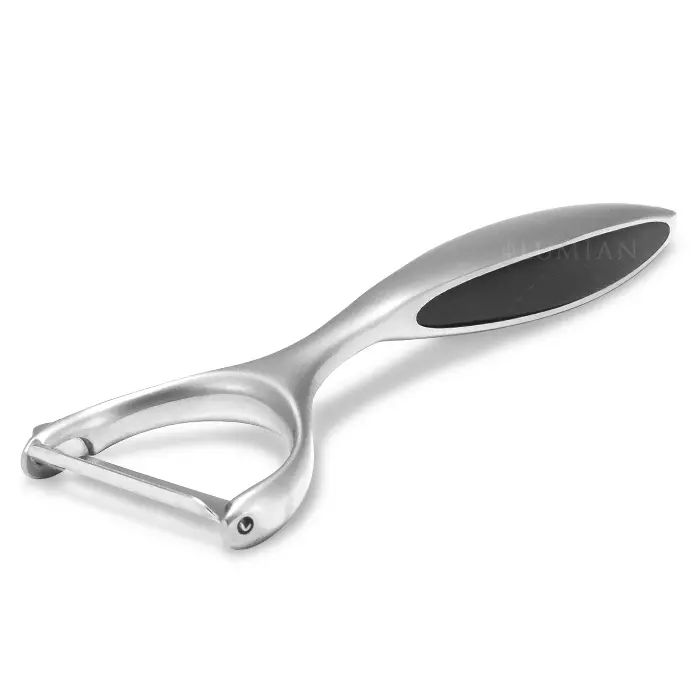
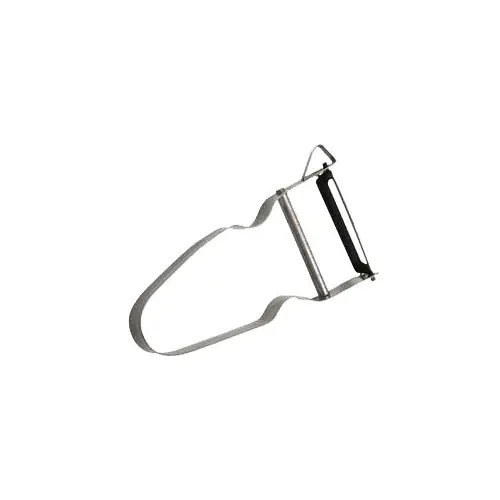
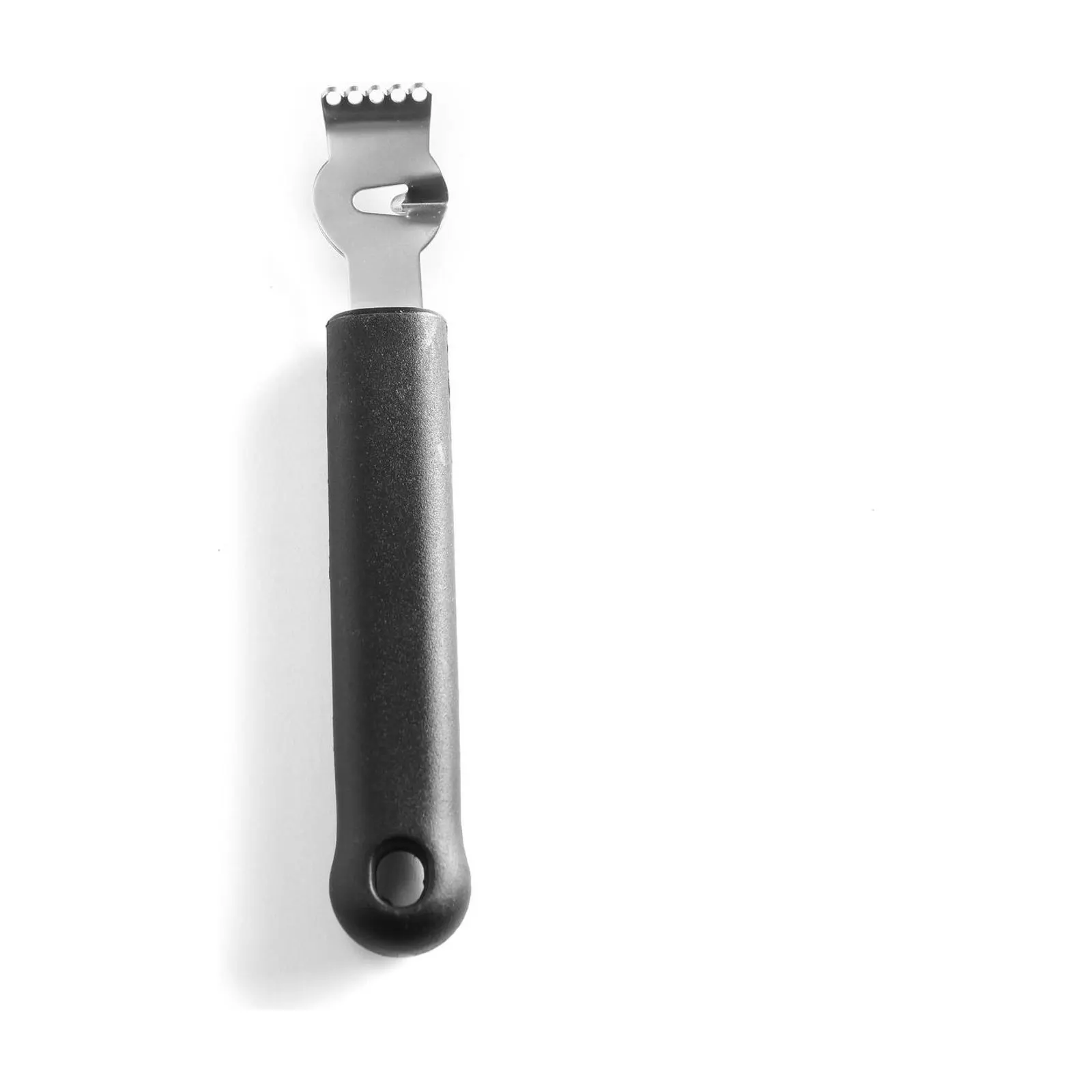
This is a 21cm citrus peeler in stainless steel with an SBC-coated handle: it takes the peel off in even strips, the starting point for a twist and for long spirals.
Who it is for
For bartenders working with wide peels. Old Fashioned and Martini makers use this cut most, because it is the one you can express the oils from over the glass.
The difference between a good peel and one to throw away
It is how much white pith comes with it. The pith is bitter and holds no essential oils: if the strip takes too much, expressing it over the drink adds bitterness without adding aroma. The blade of this peeler is set to take the top layer and stop, and that is the whole job of the tool: not to cut deeper, but to cut to the same depth every time.


Specifications
- Material: stainless steel
- Handle: SBC coating
- Length: 21cm
- Weight: 100g
21cm, and what it is for
A comfortable grip when you peel with the fruit in your hand, the normal move for long spirals. With a short tool your hand ends up near the blade and the thumb holding the fruit gets in its path; with a long handle the two hands stay apart. The SBC coating gives grip when your fingers are wet with juice, which behind a bar is the normal state.
Citrus peeler or channel knife
The peeler makes wide strips to express, the channel knife thin strips to drop into the drink. They are two garnishes with two purposes: the first brings aroma, the second brings shape. A list of spirit-forward classics almost always uses the first; long drinks and summer cocktails more often use the second.
The long spiral
You get it by turning the fruit, not the tool. Blade resting, steady pressure, and the wrist of the hand holding the orange turning slowly: the strip comes out in one piece and the same width all the way. Stopping halfway leaves a step, and the spiral breaks right there. It takes five pieces of fruit to learn, and then it stays.
Which citrus
Oranges and lemons are right for this cut, because their peel is thick and firm. Grapefruit works well. Lime has thin, tight peel, so a wide strip nearly always takes some pith: for lime, a thin cut or a wheel is better. In every case, keep the fruit in the fridge until you cut.
The more you buy, the less you pay: 4 pieces -5%, 6 -7%, 8 -10%, on the same item.
Care
Rinse straight after use and dry fully. That clears the sticky film the essential oils leave on the blade, so the peel keeps gliding off in even strips. When a peeler starts giving uneven strips, it almost always needs cleaning, not replacing.
FAQ
What is the citrus peeler for? Taking wide, even strips of peel to express over the drink.
How long is it? 21cm, with an SBC-coated handle.
How does it differ from a channel knife? This makes wide strips to express, the channel knife thin strips to drop into the drink.
Why is the peel sometimes bitter? Because it brings the white pith with it, which is bitter and has no oil.
How do I make a long spiral? Turn the fruit rather than the tool, with steady pressure and without stopping.
Does it work on lime? Less well: the peel is thin and tight, and the strip takes the pith with it.
Other cutting tools are in the chopping boards and knives category.
Dispatched from Rome, Italy. 15-day returns, free of charge.
Questions before you order? Message us on WhatsApp on +39 351 929 6937.


Reviews
There are no reviews yet.