


The Hoffman bar spoon in two lines
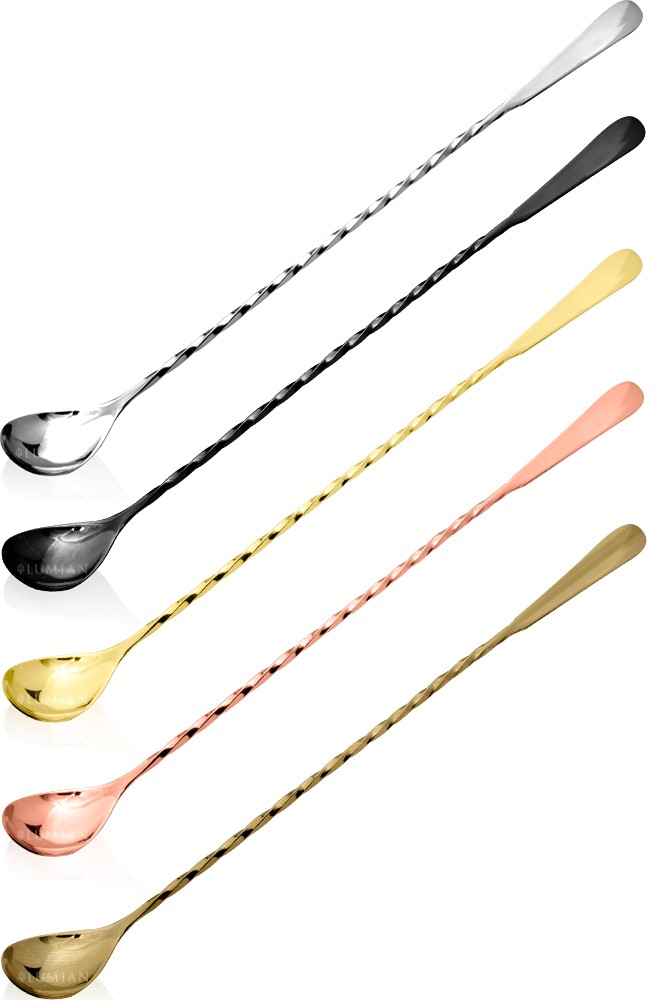
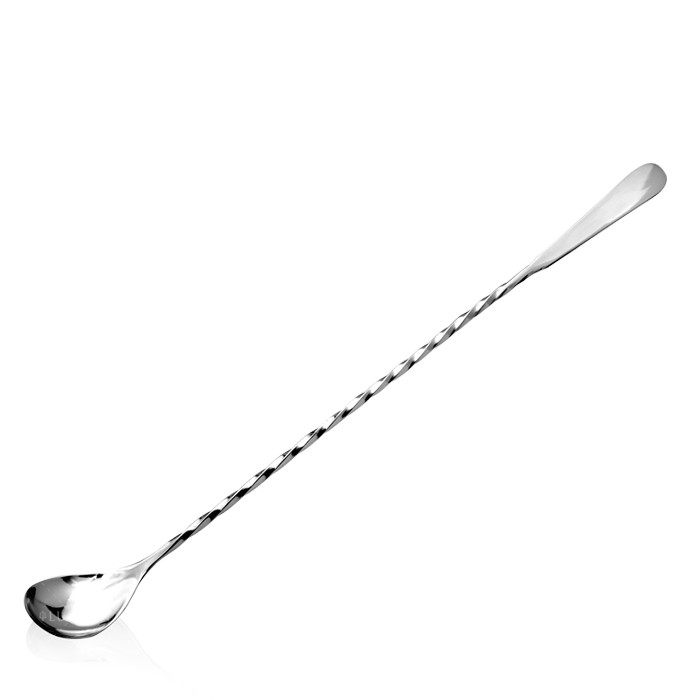
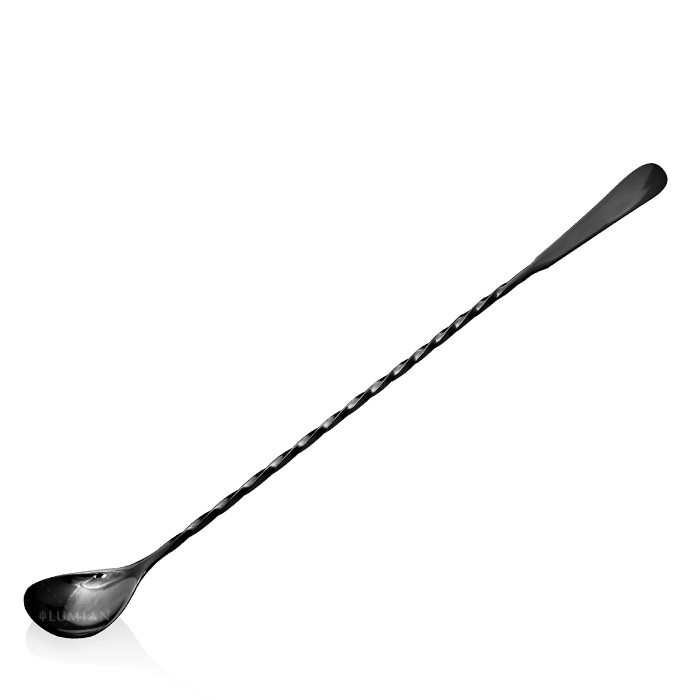
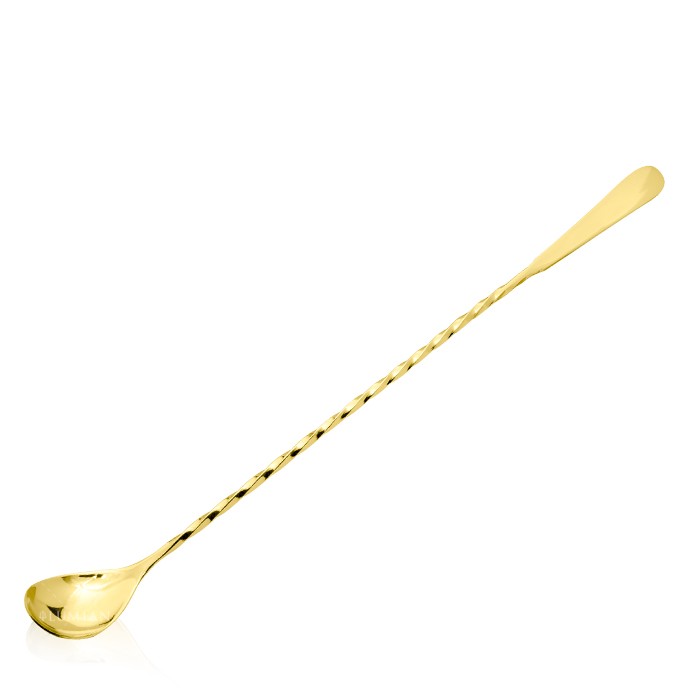
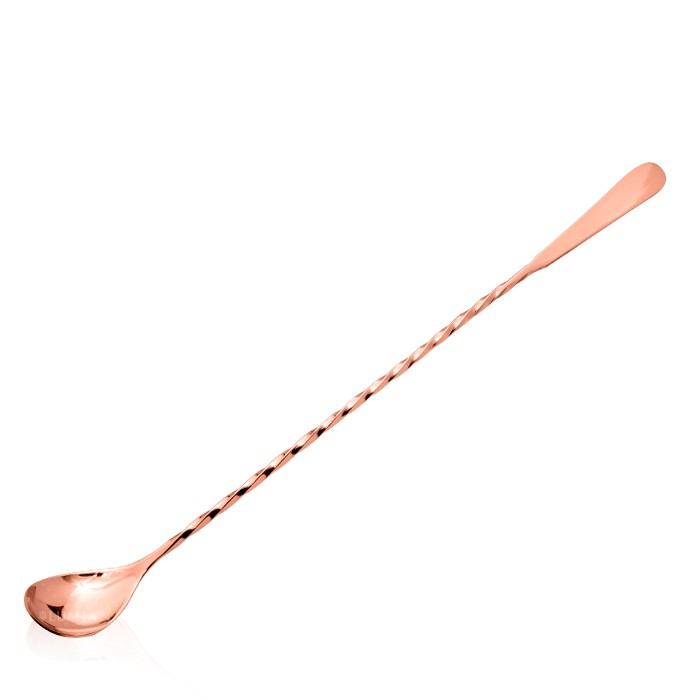
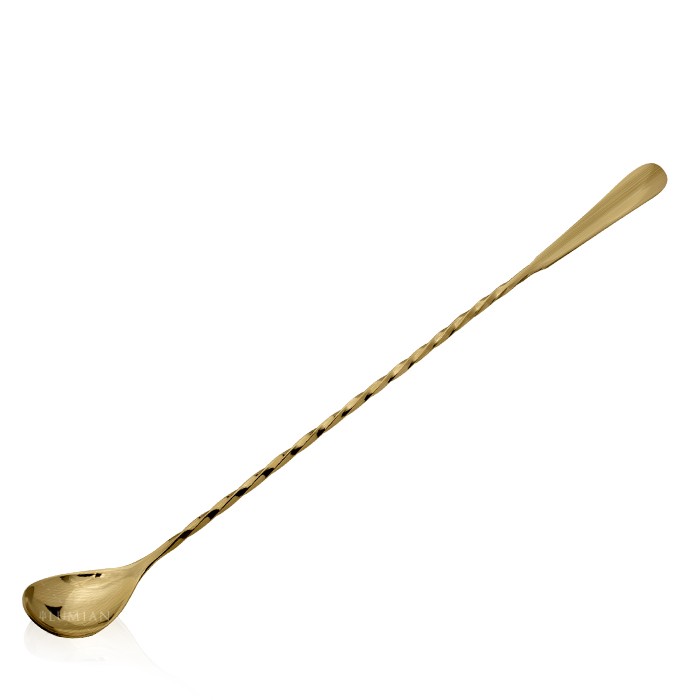
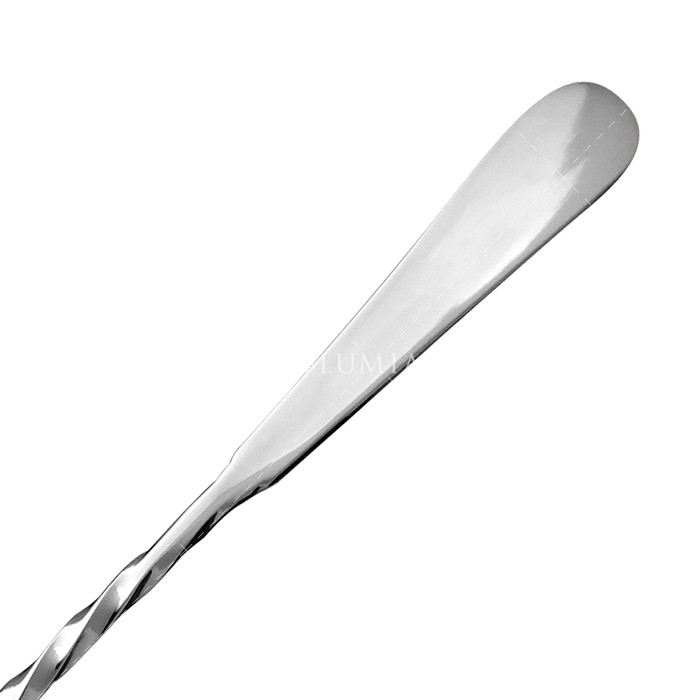
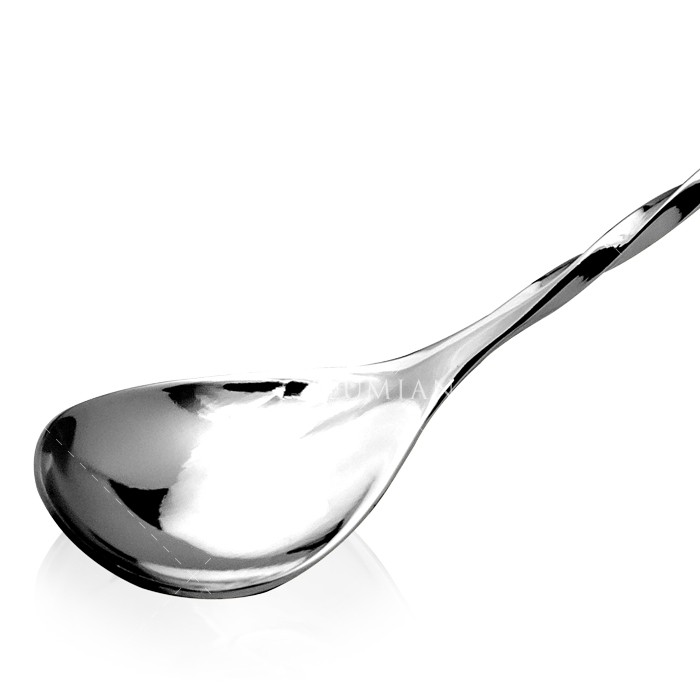
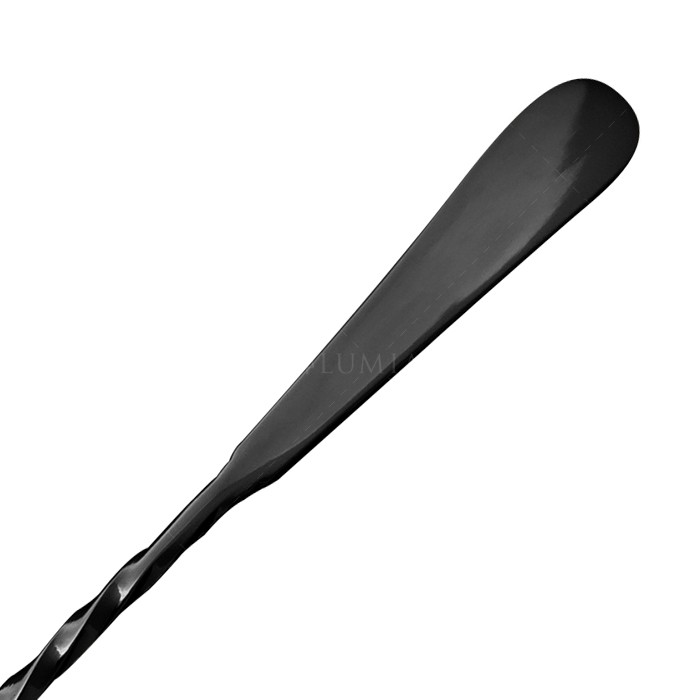
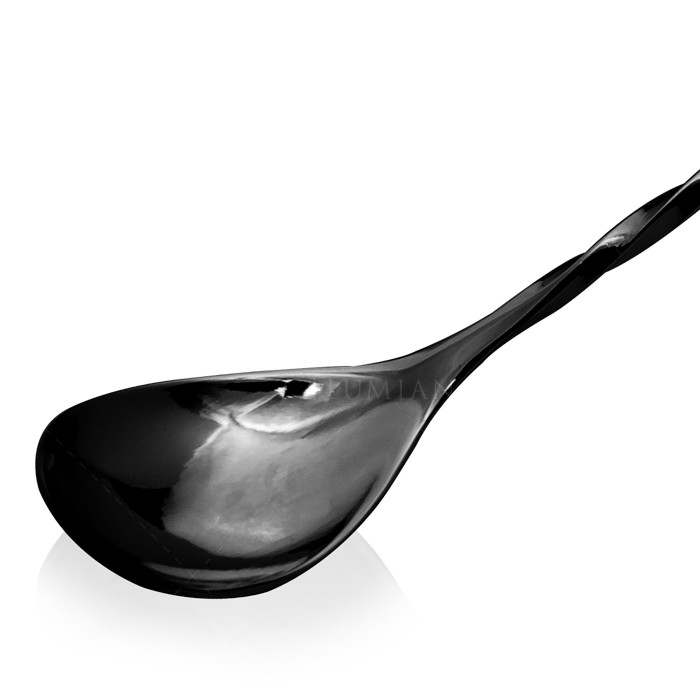
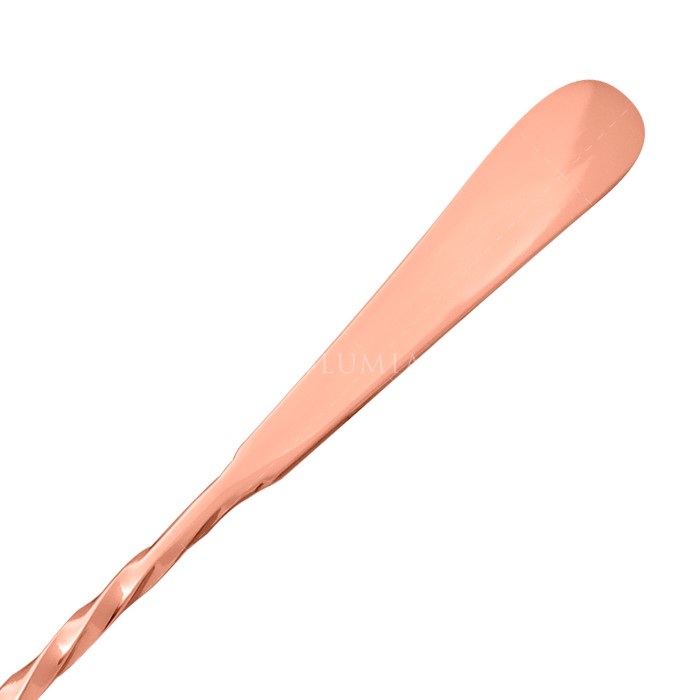
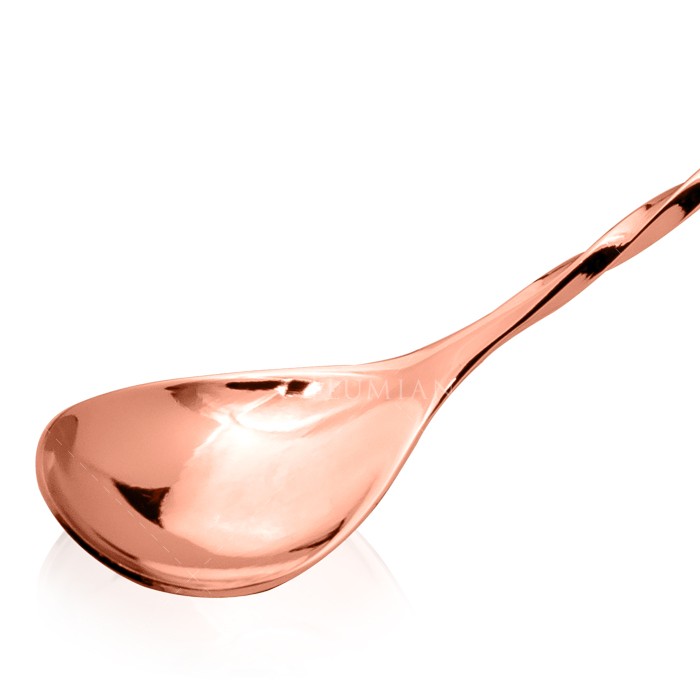
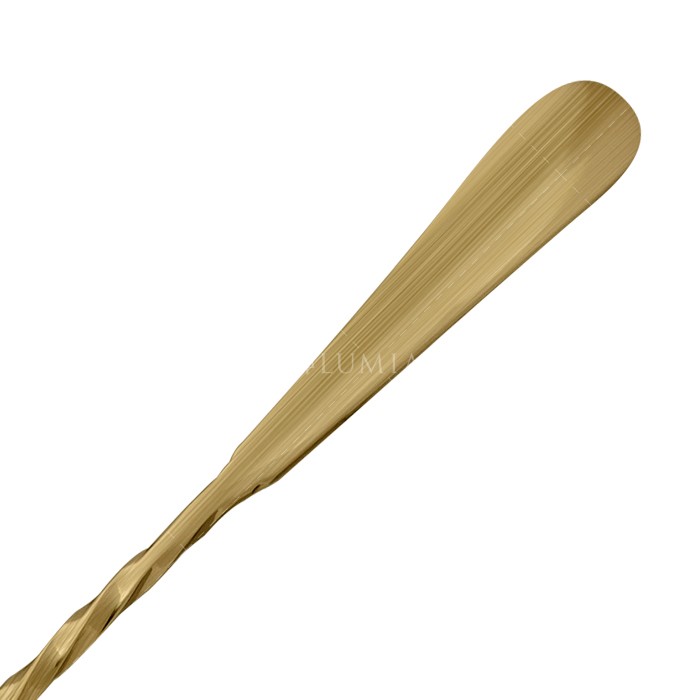
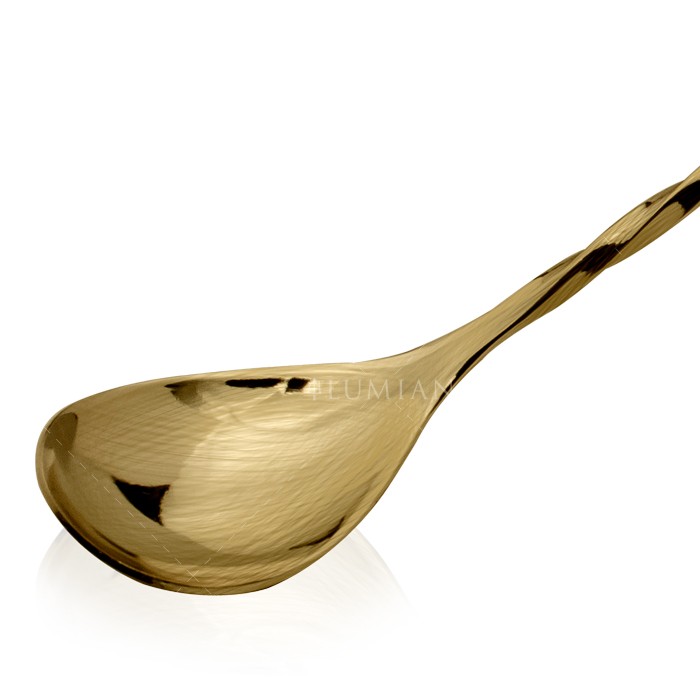
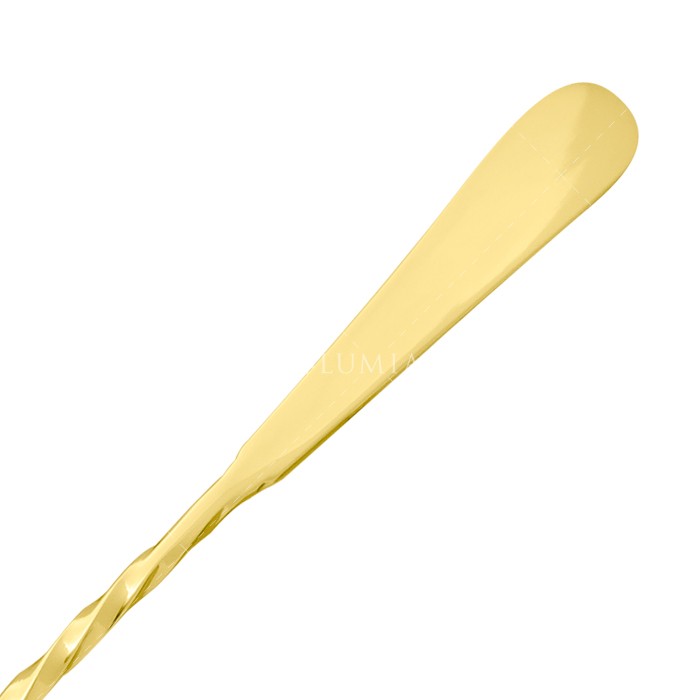
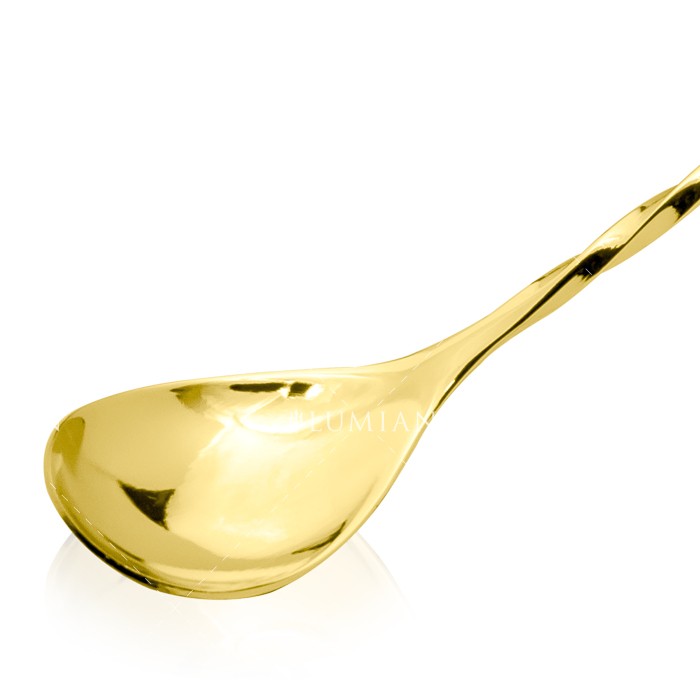
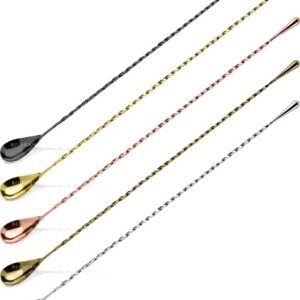
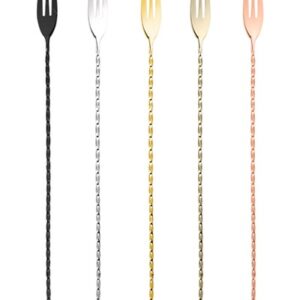
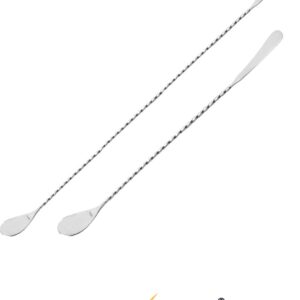
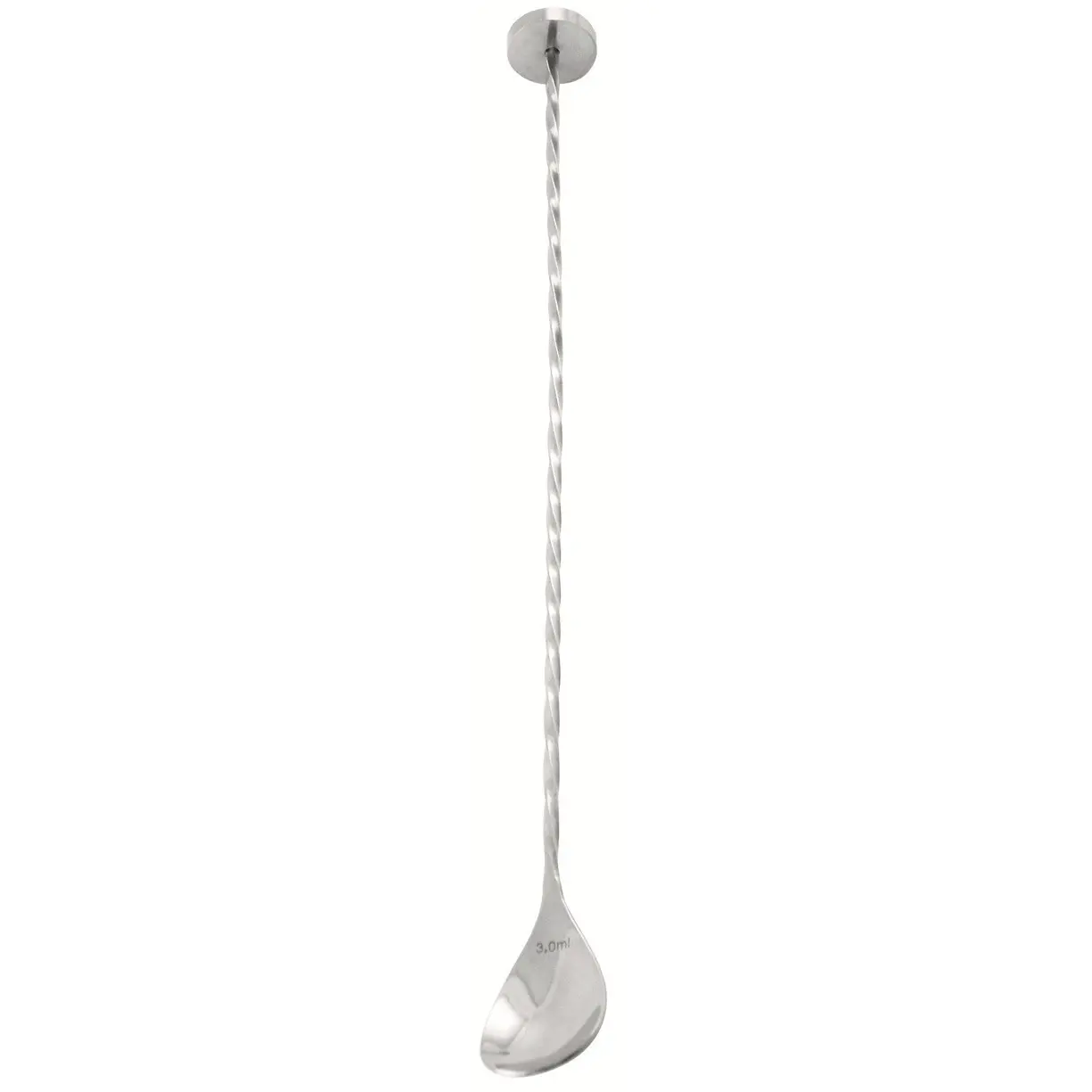
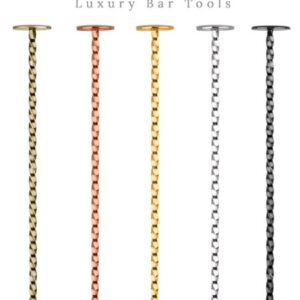
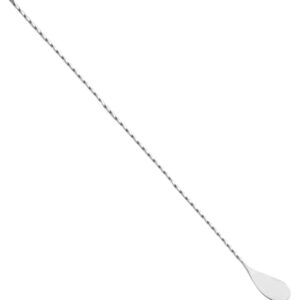
The Hoffman bar spoon is the most classic stirring spoon there is: spiral stem, bowl at one end and a flat tongue at the other, 30 centimetres long. This is the plated version, in five finishes: black, silver, gold, copper and bronze.
Who it is for
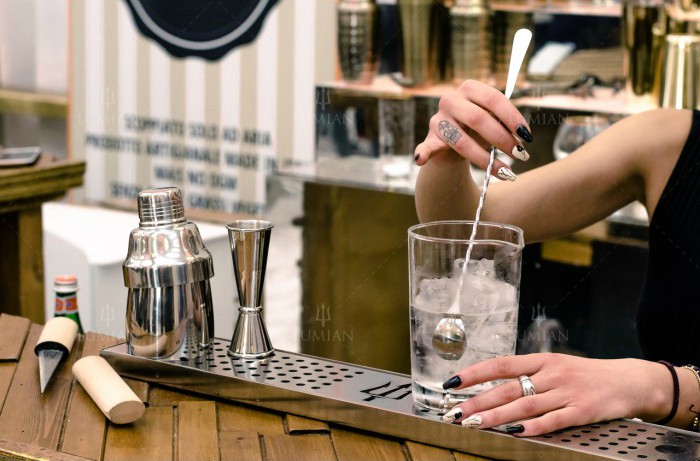
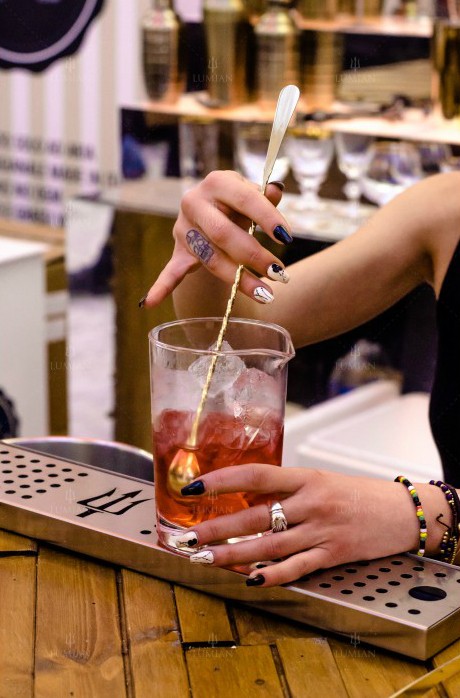
For anyone building stirred drinks in front of the guest. The spoon is the tool that stays longest inside the vessel during the build, so it is the one where a finish gets noticed first: thirty seconds of stirring are thirty seconds in which the colour is working.
Why it is called Hoffman
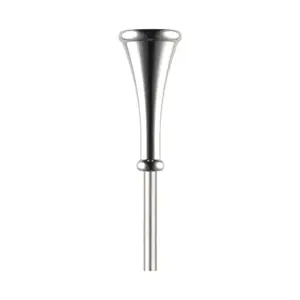
It is the name the trade uses for a bar spoon with a flat tongue at the end opposite the bowl, the commonest and the oldest form. That tongue has a precise job: you rest its back against the inner wall of the glass and pour the liquid over it, so it settles on the layer below instead of mixing in. That is how layered drinks and floats of cream or wine are made. A Hoffman bar spoon is therefore two tools in one, and you do not find the second until you need it.


Specifications
- Length: 30cm
- Material: stainless steel
- Stem: spiral
- Opposite end: flat tongue
- Finishes: black, silver, gold, copper, bronze
- Dishwasher safe: no, hand wash on the plating
Thirty centimetres, for which vessels
For short mixing glasses, for service glasses and for long drinks built straight in the glass. In a 28oz tin or a tall mixing glass a 30 centimetre Hoffman reaches the bottom but leaves little travel, and the hand ends up near the liquid: anyone working with those vessels takes a 40 or a 45 from the same family. The rule always holds, you choose the length on the tallest vessel in your kit.
The plating and the wash
The five finishes are outer coatings, and industrial dishwasher cycles dull them in patches that do not come back: hand wash with a neutral soap and dry straight away. On a tool that costs little that can feel like a nuisance, and instead it is what separates a spoon still good to look at after two years from one that has gone patchy.
How to stir
The stem turns between thumb and index finger while the bowl stays against the wall: the spoon moves, not the arm, and the ice turns as a block without knocking. Twenty or thirty turns are enough, and the reference is not the time but the frost forming on the outside of the vessel. Stirring longer does not chill it more, it dilutes it.
How many to keep on the station
At least two, and that is not a figure of speech. The spoon gets dirty at every garnish picked up and every taste taken, and with only one you end up either washing it constantly or using it dirty. On a bar on show it also pays to keep a plated Hoffman for the drinks built in front of the guest and a bare steel one for the work of rhythm, where it goes in the dishwasher with everything else.
The finish and the light in the room
Gold, copper and bronze give under low, warm light and go flat under white light; black does not reflect the spots; silver works with everything. The finish is chosen by looking at your own bar at nine in the evening, not at the catalogue photograph.
FAQ
How long is the Hoffman bar spoon? Thirty centimetres, the size for a short mixing glass and for glasses.
What is the tongue at the end for? Layering: you pour the liquid over its back so it runs down the wall.
How many finishes are there? Five: black, silver, gold, copper and bronze.
Is it dishwasher safe? No, the plating gets damaged: hand wash.
What is the difference from the bare steel model? Only the finish, which does decide how it gets washed.
For the comparison between models there is the bar spoon guide.






Reviews
There are no reviews yet.