
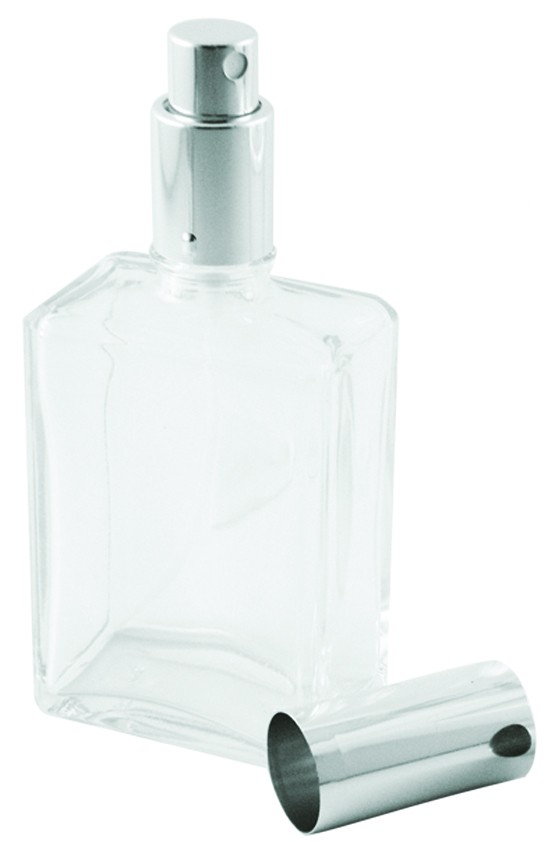

The bitter spray bottle in two lines
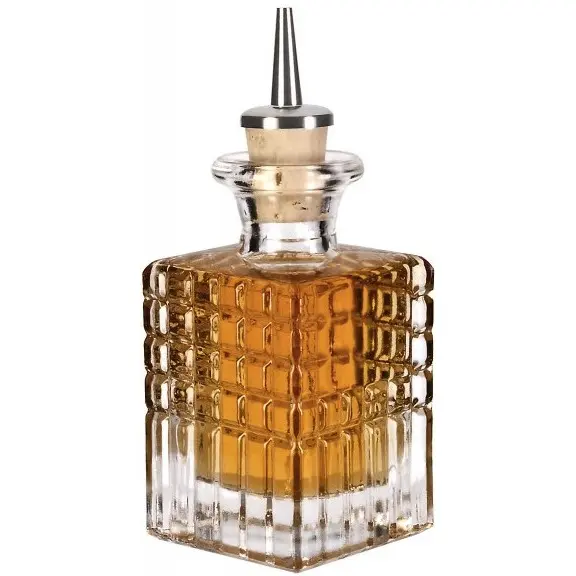
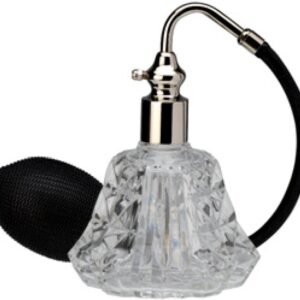
This is the bitter spray bottle: 100 millilitres of square glass with an atomiser head where the cap would be. It sprays liqueurs, bitters and essences over a finished drink or inside an empty glass, rather than pouring them.
Who it is for
For anyone who wants the aroma without the volume. That is the point of the whole family: a spray adds scent to a cocktail without adding liquid, so it moves neither the balance of the spec nor the dilution. No other tool behind the bar does that.
A spray replaces a rinse, at a tenth of the cost
The traditional rinse means pouring 10ml of absinthe or peated whisky into a glass, turning it around the walls and tipping the rest away: the result is good and the waste is large, because only a fraction of that 10ml stays in the drink. Two sprays cover the same surface with a few tenths of a millilitre. Over a 70cl bottle the difference runs into hundreds of drinks, and it is the reason bars working from a built list all keep at least one atomiser on the station.


Specifications
- Capacity: 100ml
- Bottle material: glass
- Delivery: atomiser, fine mist
- Use: liqueurs, bitters, essences and house preparations
The aroma arrives before the sip
What we call taste is mostly smell, and smell works before the glass reaches the lips: a mist over the surface of a drink puts the scent exactly where the nose meets it first. That is why a spray of peated whisky over a whisky cocktail shifts the reading more than the same amount poured in, where it would be lost among the other ingredients.
What goes inside
Absinthe and anise liqueurs for rinses, peated whiskies for a smoked note, aromatic waters and herbal spirits for a finish, food grade essential oils well diluted. It is worth keeping one bitter spray bottle per preparation rather than swapping contents: the narrow channel holds enough liquid to carry the previous product into the first few sprays.
How to spray, and from how far
From 20 to 25cm, with one or two presses. Closer and you get a jet instead of a mist, and the liquid lands in one spot; further and half of it ends up on the bar top. The right movement is to hold the bottle high and slightly tilted and press once while watching the surface of the drink: if an even veil has formed the job is done, and the second press is almost always one too many.
Inside the glass or over the drink
These are two different jobs. Inside the empty glass, before you pour, the scent runs through the whole drink and shows on every sip: that is the rinse. Over a finished drink it stays on the surface and reaches mainly the nose, so it is strong at the start and fades: that is the finish. The same bottle does both, and they are worth choosing between rather than accepting by chance.
Care
Rinse the head by working it with warm water until it runs clear, because it is the narrow channel that blocks, not the bottle. Sugary liquids are the worst of all: a syrup will stop an atomiser in one evening. The rule is to use it only with clear, thin liquids, which is what it was built for.
FAQ
How much does the bitter spray bottle hold? One hundred millilitres, which with an atomiser lasts a very long time.
Why use it instead of a rinse? Because it covers the same surface with a fraction of the product.
Can it be used with syrups? No: thick, sugary liquids block the channel.
What is the bottle made from? Glass.
Do I need one bottle per preparation? Yes, it pays: the channel holds the previous product.
The more you buy, the less you pay: 4 pieces -5%, 6 -7%, 8 -10%, on the same item.
Dispatched from Rome, Italy. 15-day returns, free of charge. Questions before you order? Message us on WhatsApp on +39 351 929 6937.
The other atomisers and dash bottles are in the bitter bottle category.



Reviews
There are no reviews yet.