
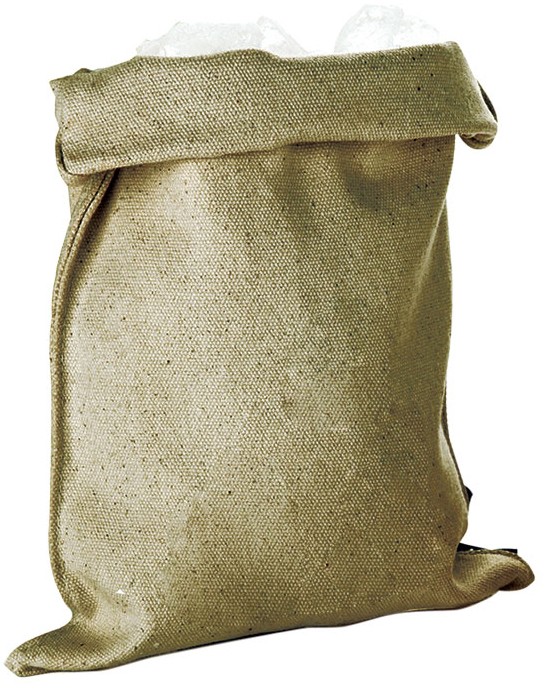
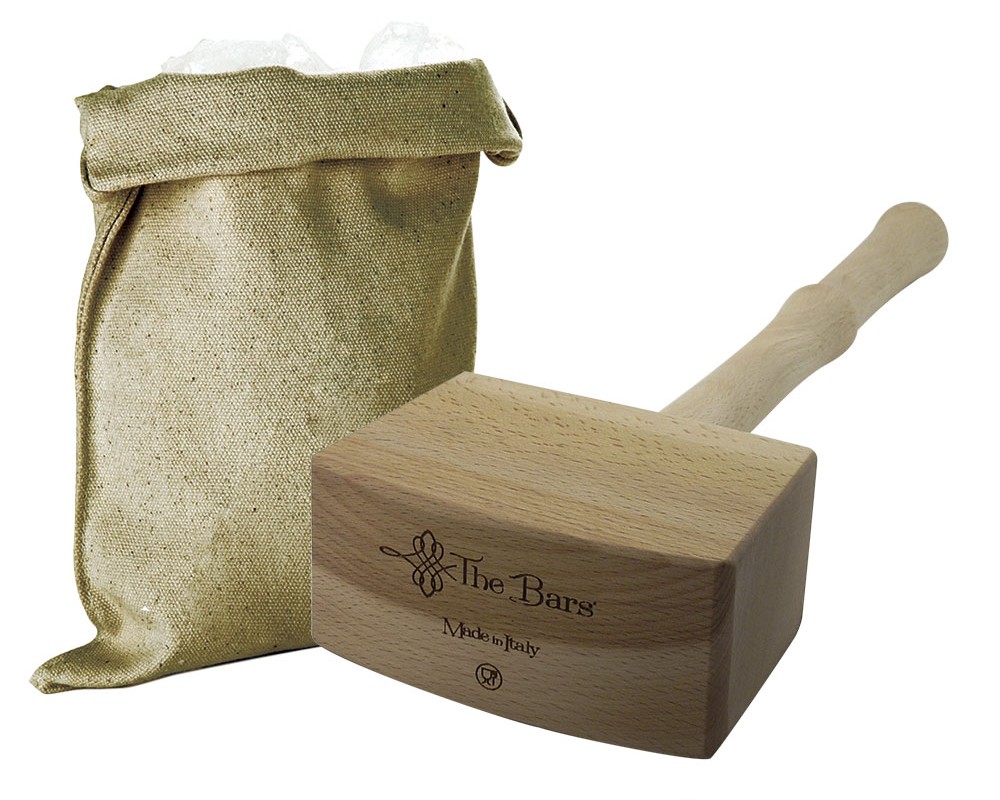

The cotton ice bag in two lines
A cotton bag, the container you break ice in with a mallet, which holds the shards and soaks up the melt in the same moment. It is the tool a bartender also knows as a Lewis bag.
Who it is for
For anyone crushing ice by hand. Without it the ice flies everywhere and the water ends up on the bar top; with the bag the work stays inside a container and the counter stays dry.
Cotton does two jobs at once
The first is holding back the shards, which would otherwise land among the clean glasses and on the floor, where they become a slip. The second is less obvious and matters more: it soaks up the water the ice releases as soon as it starts to break. That water is exactly what makes crushed ice soggy, and soggy crushed ice packs down in the glass instead of staying loose, so the drink waters and the serve falls apart.


Specifications
- Material: cotton
- Use: breaking ice with a mallet
- What it does: holds the shards and soaks up the melt
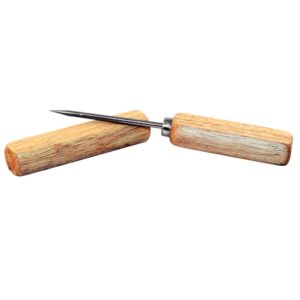
- Pairs with: a wooden ice mallet
How to use it, in four steps
Fill the cotton ice bag halfway and no further, because a full bag leaves the ice no room to move and the blows never reach the pieces in the middle. Close it by rolling the opening under the bag itself. Rest it on a solid surface, better still with a board underneath so the blows do not travel into the counter. Strike with the mallet, turning the bag every two or three blows, until the sound changes: when it stops being sharp and goes dull, the ice is ready.
Cotton dries, plastic does not
That is why this tool is made of cloth and not of something more modern. A waterproof bag would hold the shards but keep the water in with them, handing back wet crushed ice, which is the opposite of the point. Cotton absorbs and then gives the moisture back to the air, and between uses it comes back dry on its own if you hang it rather than leave it in a ball.
How many you need
Two, and that is not a sales line: it follows from the washing. A cotton ice bag gets washed often and needs hours to dry through, so with only one you end up using it still damp, which is the state that gives wet crushed ice and lets the cotton pick up a smell. With two you alternate, and each one dries in its own time between shifts.
Hygiene, which here is the serious part
What goes in is ice that ends up in glasses, so the bag counts as a food contact surface in every sense. Wash it regularly in the machine with no fabric softener, which leaves a scented residue the ice picks up, and dry it completely before it goes away: damp cotton shut in a drawer takes on a smell overnight, and that smell goes straight into the next drink.
Care
Frequent washing, hung out to dry in the air, never folded away wet. If the cotton ice bag starts showing open seams it wants replacing, because a shard escaping through a seam under a blow goes exactly where it should not.
FAQ
What is the cotton ice bag for? Breaking ice with a mallet while holding back the shards and the water.
Why cotton? Because it soaks up the melt: a waterproof bag would hand back wet crushed ice.
How full should it be? Halfway: the ice needs room to move under the blows.
How is it washed? In the machine with no fabric softener, then hung to dry.
Do I need the mallet as well? Yes, the two tools work together.
The more you buy, the less you pay: 4 pieces -5%, 6 -7%, 8 -10%, on the same item.
Dispatched from Rome, Italy. 15-day returns, free of charge. Questions before you order? Message us on WhatsApp on +39 351 929 6937.
The other tools for working ice are in the ice accessories category.





Reviews
There are no reviews yet.