
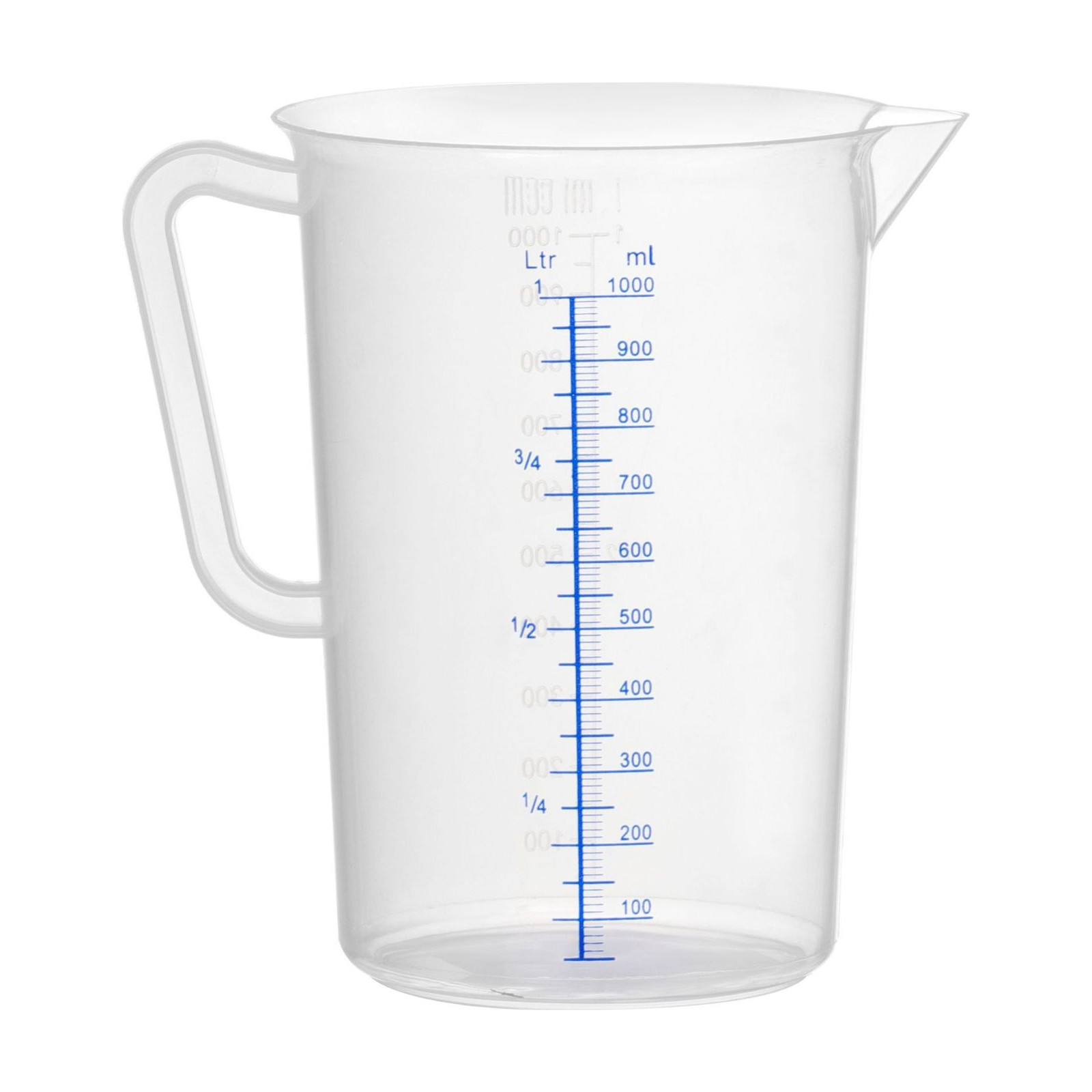
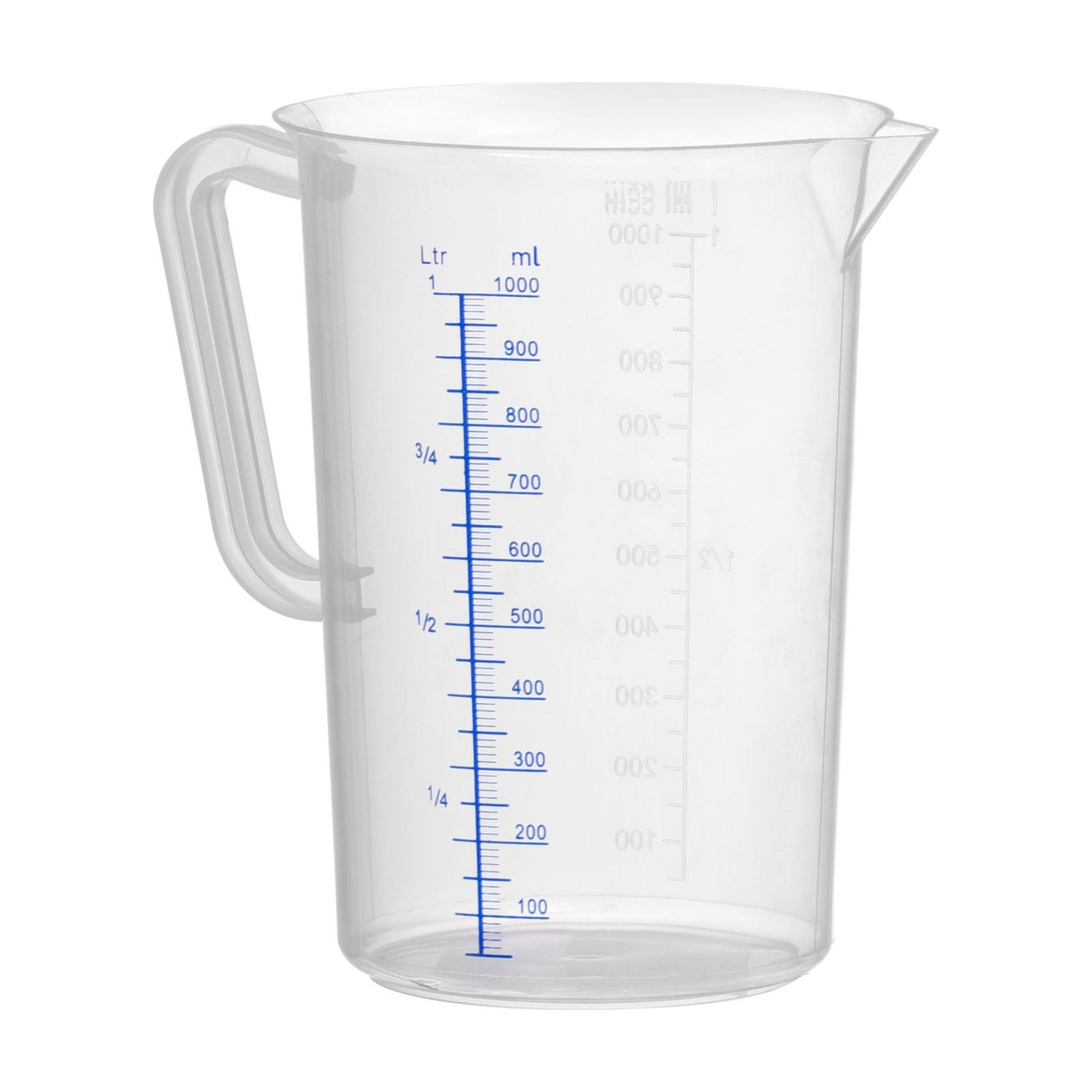

The 1000ml measuring jug in two lines
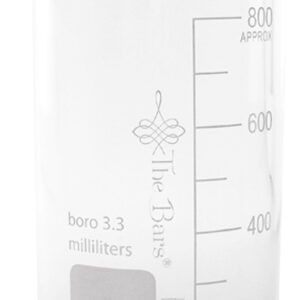
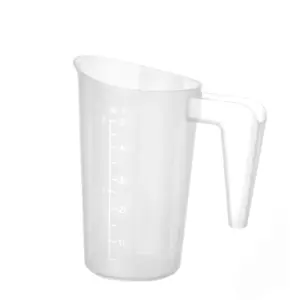
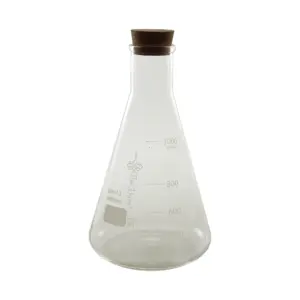
This is the 1000ml measuring jug in clear plastic: the level reads through the wall and the diameter lets a stick blender go in.
Who it is for
For anyone prepping in quantity. A jigger measures a dose, this measures a preparation: syrups, premixes, bases to be clarified, solutions to be decanted.
The diameter counts for more than the capacity
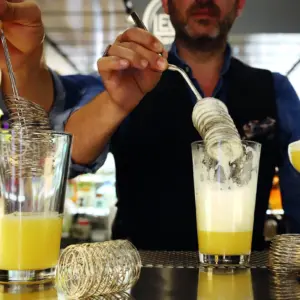
This is what separates a lab vessel from any old jug. The wide mouth lets you work inside with a stick blender without the liquid coming over the side and without the head of the machine touching the wall: that is how the airs and the spheres of molecular mixing are made, where air has to be worked in or a thickener dispersed evenly. In a tall narrow 1000ml measuring jug the blender does not work, in a wide one it does.
Specifications
- Capacity: 1000ml
- Material: clear plastic
- Graduation: scale on the body
- Dimensions: 11.5 x 18 x 18.5cm
- Weight: 0.1kg
- Dishwasher safe: no, hand wash in warm water
How to read a scale without getting it wrong
With the jug standing on the bench and the eye at the height of the level, not looking down. From above you always read a higher figure than the true one, and that is the mistake that ends with less liquid in than intended without anyone noticing. On a one litre preparation a reading error of twenty millilitres goes unseen; repeated every time, it moves the recipe.
Plastic, and when it is the right call
It weighs little, it does not break when dropped and it costs a fraction of glass: on a working vessel that gets moved, set down and poured out of dozens of times, those are three good reasons. The limit is heat, because a plastic 1000ml measuring jug is not for boiling liquids and should not be left near a heat source. Hot preparations want glass or steel.
What actually gets made in it
Syrups, because the scale lets you hold the ratio of sugar to water without weighing. Premixes for service, reading the level at each ingredient. Solutions with thickeners, where the blender is what keeps the lumps out. And airs, made by working a liquid with lecithin and a blender tilted just under the surface: that is the preparation where the wide mouth becomes the whole point.
Care
Hand wash in warm water with a mild detergent. The dishwasher, at commercial cycle temperatures, can distort the plastic and cloud the printed scale, which is the one thing that makes this vessel useful. No scouring pads, for the same reason.
Why a kitchen jug is not enough
Because on a kitchen jug the scale is indicative and meant for pouring, not measuring: the intervals are wide, the wall is thick and often tinted, and the base tapers exactly where small quantities want reading most. A lab style 1000ml measuring jug has a thin clear wall, a cylindrical body and a close scale, so the same reading holds at one litre as at two hundred millilitres. It is a difference you only see once you start repeating the same preparations, which is exactly what happens in a bar.
FAQ
How much does the 1000ml measuring jug hold? One litre, with the scale printed on the body.
Can a stick blender be used in it? Yes, the diameter is sized for that.
Does it take hot liquids? No, it is plastic: heat wants glass or steel.
How is the scale read? With the jug on the bench and the eye at the height of the level.
Does it go in the dishwasher? Better by hand: heat distorts the plastic and wears the graduation away.
What is it for in a bar? Syrups, premixes, solutions and airs, that is everything made in quantity.
The more you buy, the less you pay: 4 pieces -5%, 6 -7%, 8 -10%, on the same item.
Dispatched from Rome, Italy. 15-day returns, free of charge. Questions before you order? Message us on WhatsApp on +39 351 929 6937.
The other tools are in the molecular mixology category.
Reviews
There are no reviews yet.