
The amber dropper bottle in two lines
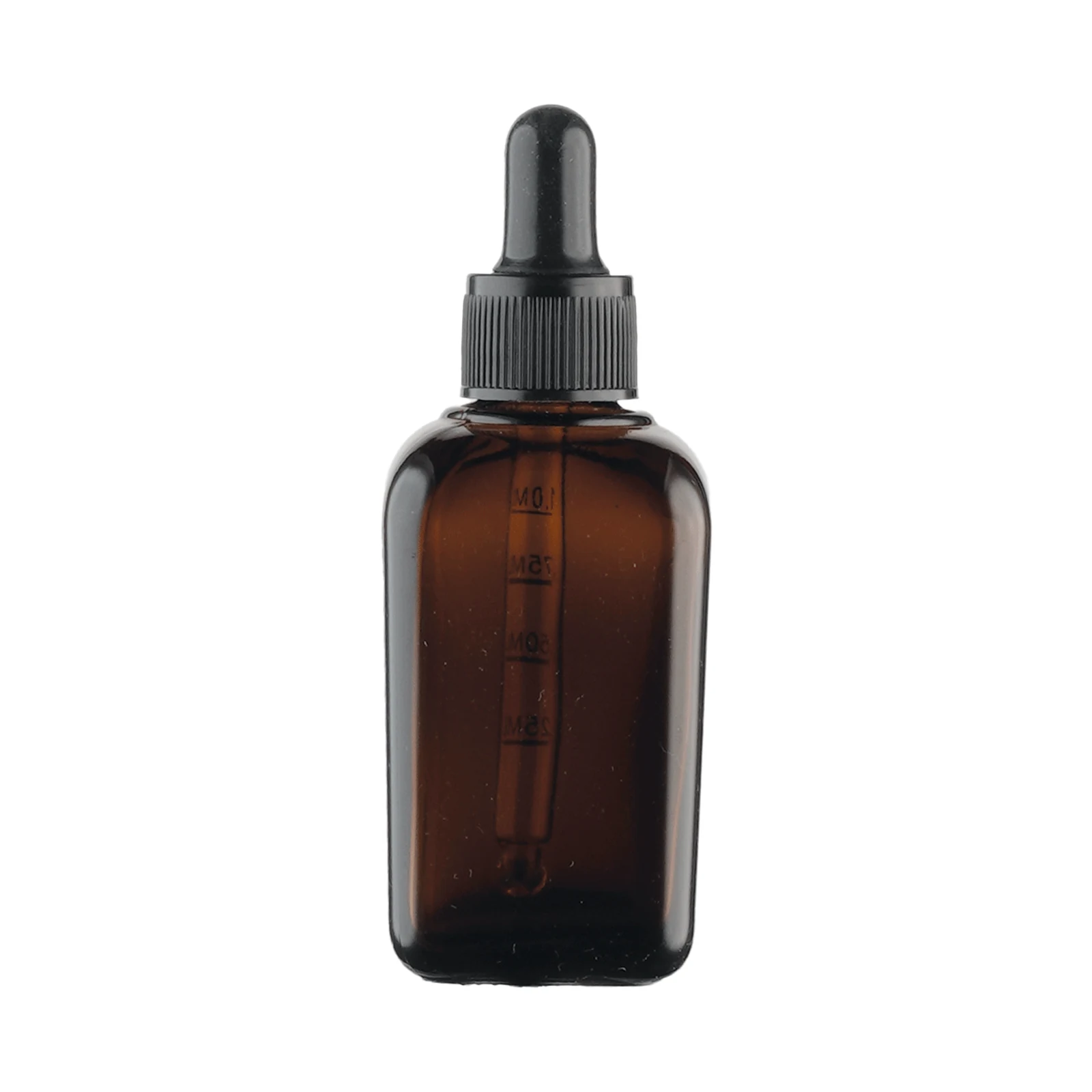
The amber dropper bottle is a 50ml bottle in borosilicate 3.3 glass, with a screw cap that holds a graduated pipette. The dark glass keeps out the light, the pipette doses in drops and the graduations show how many millilitres you are drawing.
Who it is for
For the bartender who makes preparations in-house and wants them to taste the same in three weeks. Tinctures, extracts, saline solutions, citric acid solution: ingredients made once and used by the drop for weeks, and over those weeks the enemy is not air, it is light. An amber dropper bottle on the bar solves the problem without taking the ingredient off the station.
Why dark glass, and not clear
Because essential oils and aromatic extracts break down under visible and ultraviolet light long before oxygen gets to them. A cardamom tincture left on a lit shelf loses its aromatic top notes in a few days and only the bitterness remains; in the same spot, inside an amber dropper bottle, it holds for months. That is the only reason pharmacies have used dark glass for two centuries, and it is exactly the same problem.


Specifications
- Capacity: 50ml
- Glass: borosilicate 3.3
- Colour: amber
- Closure: screw cap with pipette
- Pipette: graduated
- Dosing: by the drop, read in millilitres
What borosilicate 3.3 means
It is laboratory glass, and the number is its coefficient of thermal expansion: 3.3 millionths per degree, against about 9 for ordinary glass. It expands very little when the temperature changes, so it does not crack when you pour in a syrup that is still warm, or rinse it with boiling water after it has been in the fridge. It is also chemically inert: citrus acids and essential oils do not attack it and it does not carry over the flavour of the previous preparation.
A graduated pipette changes the way specs are written
Without graduations a spec says “four drops”, and four drops depend on how hard you squeeze the bulb. With graduations you write a number of millilitres and read it on the glass, so the same preparation comes out the same whoever makes it. With a saline solution or an acid, where half a millilitre shifts the taste of the whole drink, that is the difference between a recipe and a guess.
A drop and a dash are not the same thing
The pipette draws up and releases where you point it, so it works well over a finished drink: a drop of tincture on the foam, a touch of saline on the finished serve. A dash pourer, by contrast, throws its measure into the tin with everything else and counts in the spec before the shake. They are two different movements at two different moments, and a bar that works with house-made bitters usually keeps both.
Care
Wash by hand in warm water and rinse thoroughly before changing preparation. Take the pipette out and rinse it separately, because that is where liquid dries and leaves residue. Keep the rubber bulb away from solvents and do not leave it to soak: it is the only part of the amber dropper bottle with a shorter life than the glass.
FAQ
How much does the amber dropper bottle hold? 50ml.
Is the pipette graduated? Yes, you read what you draw in millilitres instead of counting drops by eye.
Can I pour a warm liquid into it? Yes, within reason: borosilicate 3.3 handles temperature changes far better than ordinary glass.
Why amber glass and not clear? Because light dulls the aromas of extracts: dark glass is the simplest protection there is.
Is it dishwasher safe? The glass is, but the pipette with its rubber bulb is washed by hand.
Does it work for Angostura? It does, but for commercial bitters the natural movement is the dash: there, a bottle with a dash pourer is the better choice.
Dispatched from Rome, Italy. The other bottles are in the bitters bottles and atomisers category.



Reviews
There are no reviews yet.