

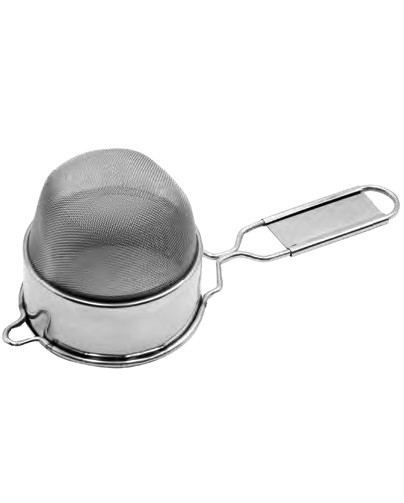
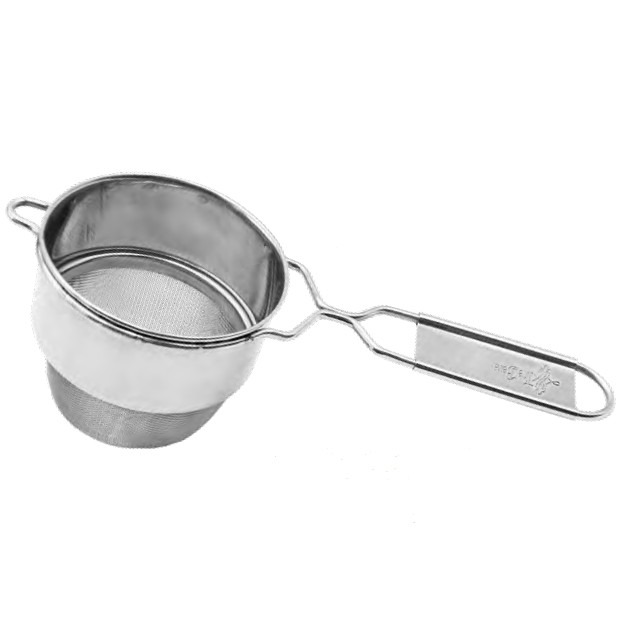

The Japanese fine strainer in two lines
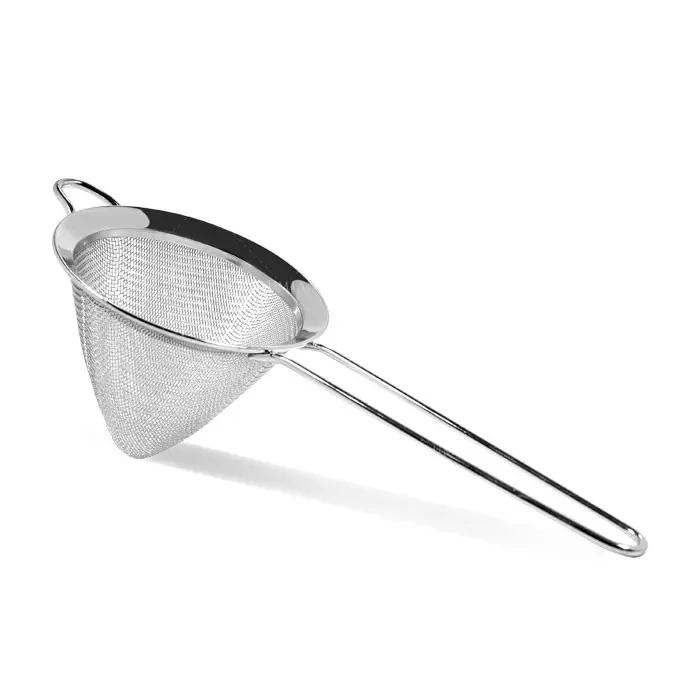
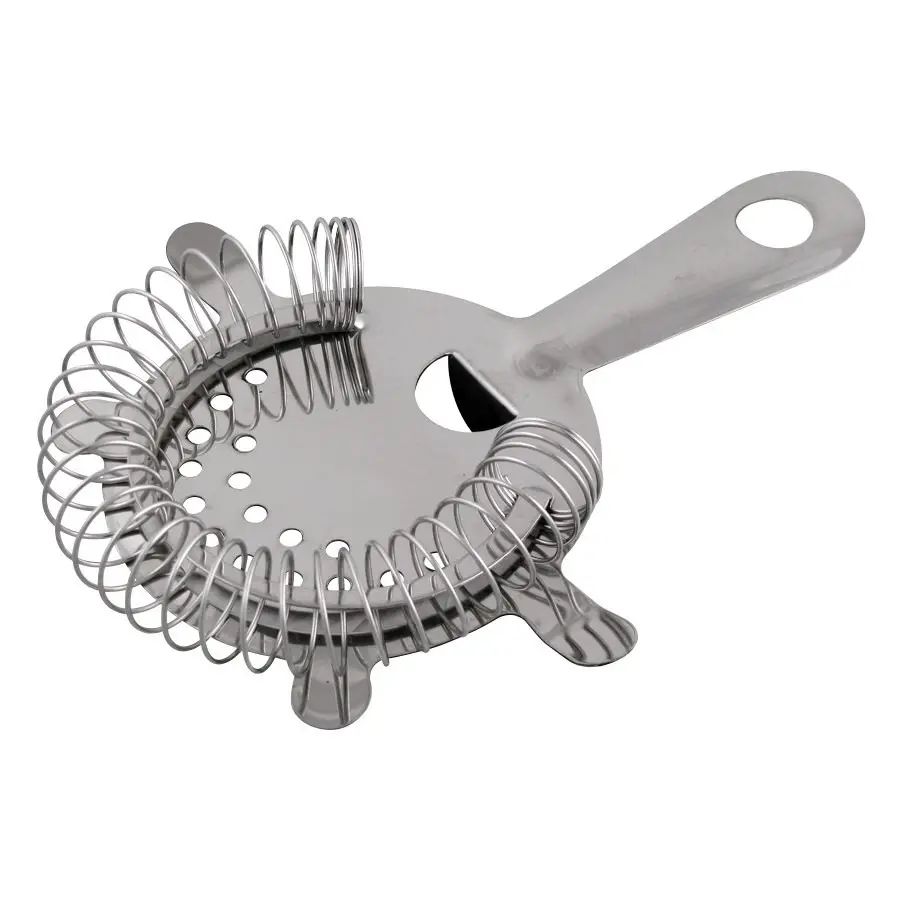
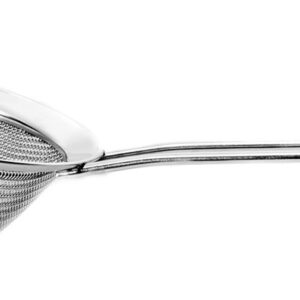
This is the fine strainer of the Japanese school, with two clear differences from a standard one: a finer mesh and a deeper bowl.
Who it is for
For bartenders who want the drink truly clean. The finer mesh holds back small particles too, the ones a normal mesh lets through and that show in the glass against the light.
The limit of a standard fine strainer, and how it is moved
You see it on drinks with a lot of pulp: the mesh clogs, the liquid slows and you have to stop and tap the strainer halfway through the pour. With a deeper bowl that moment does not come, because below the mesh there is room for the whole drink while it strains. The Japanese fine strainer pushes the limit far enough to cover a whole pour, which in service means one continuous move instead of three.


Specifications
- Mesh: finer than a standard fine strainer
- Bowl: deeper, to take the whole pour
- Material: stainless steel
- Use: fine strain (double strain), together with a hawthorne strainer
- Dishwasher safe: yes
Why the Japanese school insists on clarity
In that tradition the drink is looked at before it is drunk, and a hazy liquid tells of work done in a hurry. It is not strictly about taste: suspended particles do not change the flavour much, but they change the sense of body and the brightness of the colour. A Japanese fine strainer is there for exactly this, and it shows in clear drinks, where every speck is visible.
When a fine mesh is too much
On a drink that should keep its body. A sour with egg white, for example, lives on its foam: straining it through a mesh that is too tight holds back part of what gives the surface its texture. The practical rule is to fine strain where the drink should be clear, and ease off where it should be full.
The Japanese pour, and why it is slow on purpose
In the Japanese school the pour is part of the preparation, not the end of it: you pour slowly, keeping a continuous thread of liquid, because a hard drop breaks the foam and puts air into a drink that has just been chilled. A deep Japanese fine strainer allows exactly that, because it never makes you stop. It is a tool built around a way of working, not only around a mesh.
How to hold it
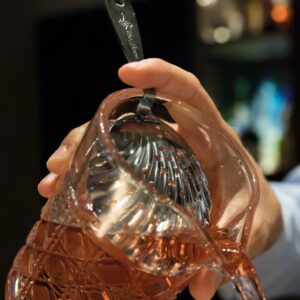
Held over the glass, not resting on it, with the handle gripped by the ring and little fingers while thumb and forefinger adjust the angle. The hand holding the tin works above, the hand holding the strainer stays still: that is the fine strain, and with a deep strainer it can be done in one continuous movement.
The more you buy, the less you pay: 4 pieces -5%, 6 -7%, 8 -10%, on the same item.
Care
Rinse straight away, since a fine mesh fills faster than a wide one: it is the other side of what it does well. Use a soft brush from the inside outwards, so what was held back comes out instead of being pushed into the weave. Dishwasher safe. Hold it up to the light now and then to check the mesh is even all over.
FAQ
How does it differ from a standard fine strainer? In two ways: the mesh is finer and the bowl is deeper.
Is it for every drink? For drinks that should be clear. On a sour with egg white a less tight mesh works better.
Does it replace the hawthorne strainer? No, it is used as well, over the glass.
Does it clog? Less than a flat strainer thanks to the deep bowl, but rinse it straight after use.
Is it dishwasher safe? Yes, placed so the spray reaches the mesh.
The three strainers are compared in the strainer category.
Dispatched from Rome, Italy. 15-day returns, free of charge.
Questions before you order? Message us on WhatsApp on +39 351 929 6937.



Reviews
There are no reviews yet.