
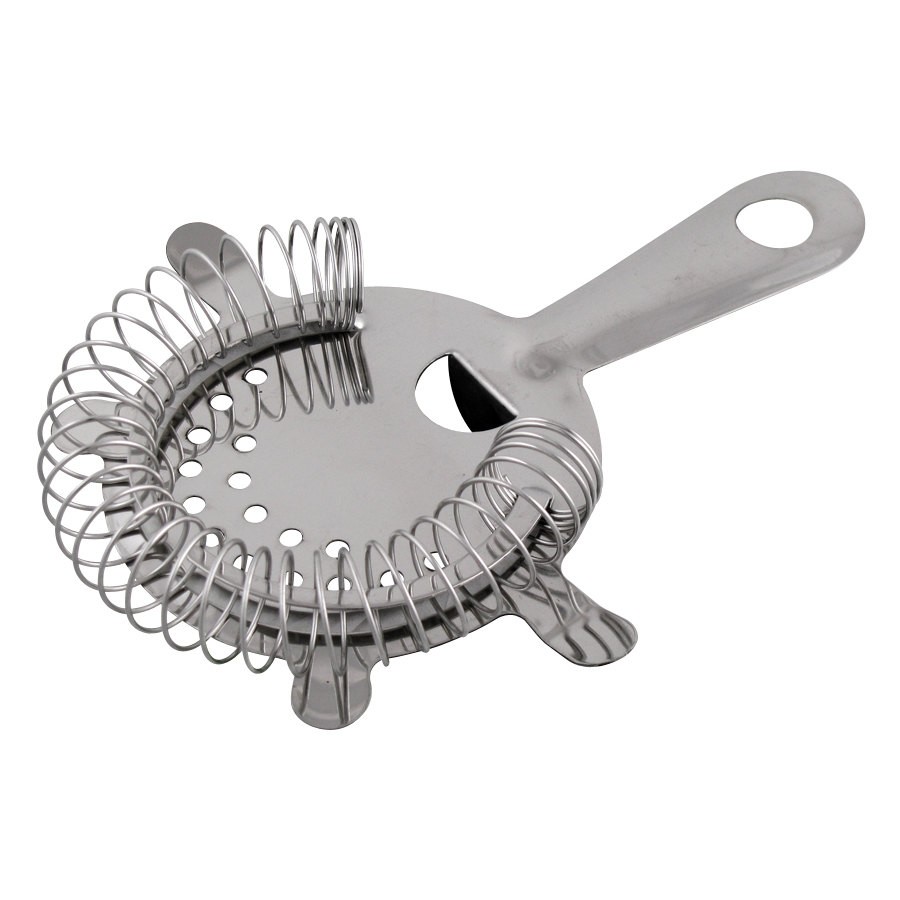

The 4 prong strainer in two lines
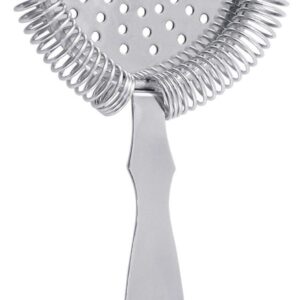
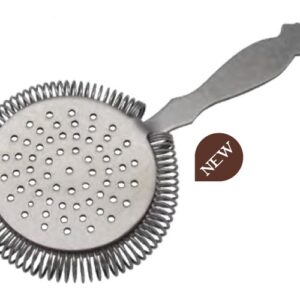
This is the stainless steel strainer with four prongs instead of the usual two. Rested on the rim, it stays in position with no finger holding it, and it is the most stable version of the family.
Who it is for
For anyone who pours with one hand. The four prongs spread the support around the whole rim, and the strainer does not turn as the tin tips.
You see the point at the worst moment
A full tin, the glass waiting, and the other hand busy with something else. With two prongs the strainer tends to turn and needs correcting halfway through the pour; with four it does not. The contact points sit opposite each other in pairs, so the rotation is blocked before it starts.


Specifications
- Material: stainless steel
- Prongs: four, resting on the rim
- Spring: holds back the ice
- Use: straining shaken drinks
- Dishwasher safe: yes
The other side of the coin
It is slower to take off. Four contact points mean one more move to free it from the rim, and at a fast pace that move counts. So the choice between two and four prongs is not between a better and a worse model: it is between stability and speed, and it depends on how you pour. One drink at a time, calmly, and four prongs suit you; three drinks at once, and two do.
The spring still decides how long it lasts
That holds for every strainer of this kind. The spring stretches, loses tension and starts letting small pieces of ice through: from then on the drink is no longer clean, and because the change comes gradually rather than all at once, it often goes unnoticed. To check it, pinch the spring between two fingers and see that it closes back against the body when you let go.
The move, and the most common mistake
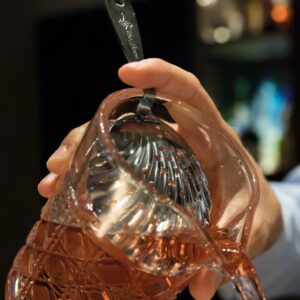
Rest it with the spring facing into the tin, then tip and pour. Finger pressure, when needed, sets the gap: press and it tightens, and less liquid passes. Pour without that control and ice shards drop through, keep melting in the glass and dilute the drink beyond the recipe. On a cocktail served up, you taste the difference by the second sip.
Which strainer, of the three
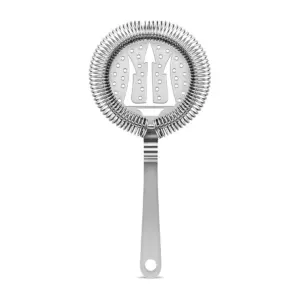
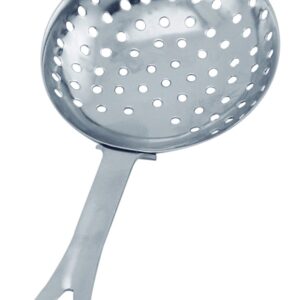
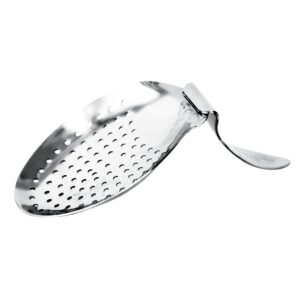
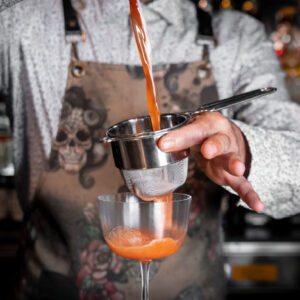
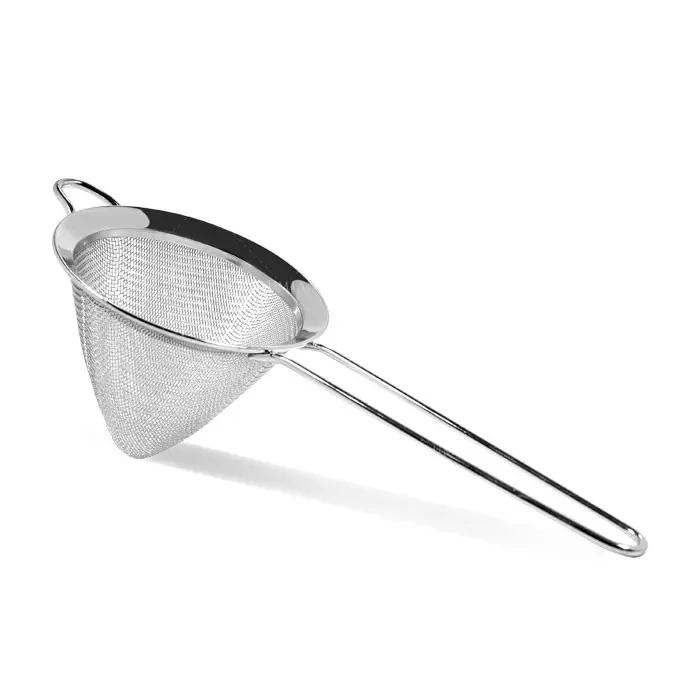
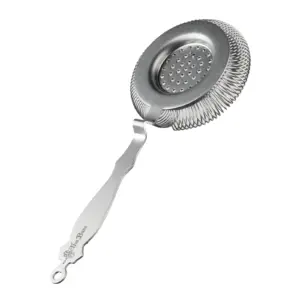
There are three and they do not replace each other, because each sits in a different place. This one sits on the tin and is for shaken drinks. The julep goes inside the mixing glass, on the ice, and is for stirred drinks. The fine strainer is held over the glass on top of either of the other two and stops what gets through anyway: shards, pulp, seeds. A station working the classics has all three.
Care
Bare stainless steel, so it goes in the dishwasher with no precautions. Rinse it straight after drinks with egg white or thick syrups, because the residue dries between the coils of the spring, the hardest part to clean later. Store it with nothing on top, so the prongs stay straight.
FAQ
How many prongs does this strainer have? Four, instead of the two on the classic models.
What are they for? Keeping the strainer steady on the rim without a finger on it, even in a one-handed pour.
Is it dishwasher safe? Yes, it is stainless steel with no finish to wear.
Is it slower to use? A little: four contact points take one more move to free it.
Do I need a fine strainer too? Yes, if you shake with fruit, pulp or egg white: fine straining takes two tools.
The more you buy, the less you pay: 4 pieces -5%, 6 -7%, 8 -10%, on the same item.
Dispatched from Rome, Italy. 15-day returns, free of charge. Questions before you order? Message us on WhatsApp on +39 351 929 6937.
The three strainers are compared in the cocktail strainer category.



Reviews
There are no reviews yet.