
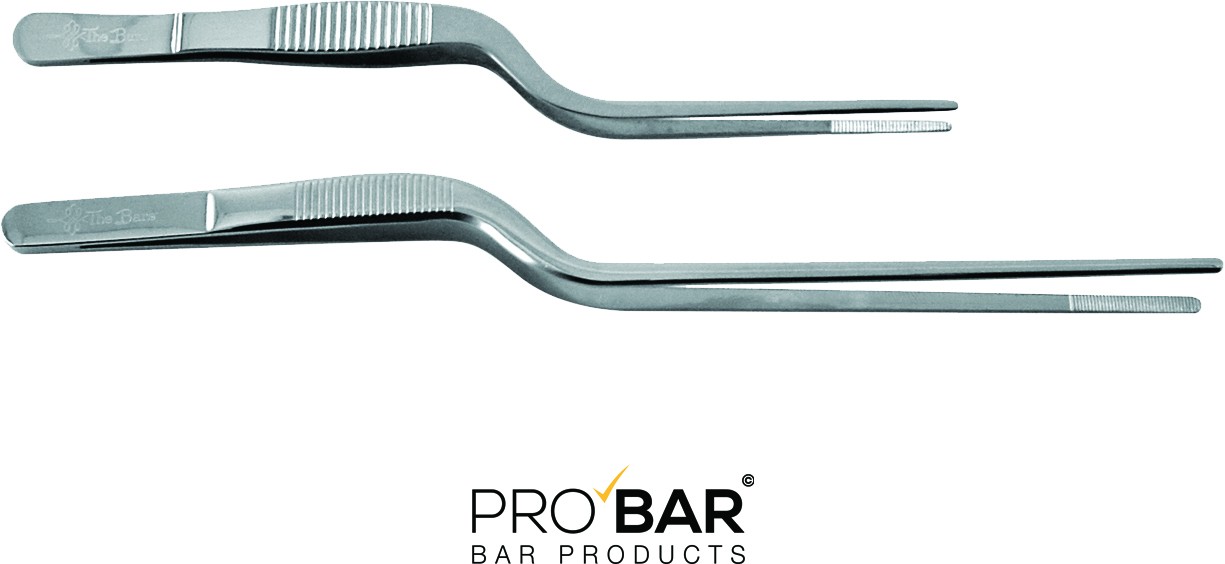



The garnish tongs in two lines
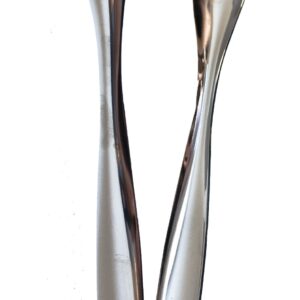
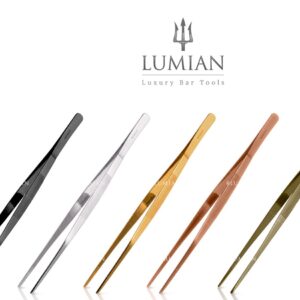
These are the curved garnish tongs in stainless steel, in two lengths, 16 and 21 centimetres: the bend near the tip lets you work close in while keeping your hand out of the guest’s line of sight.
Who it is for
For anyone finishing the drink in front of the person who will drink it. In service on show, the last thing the guest watches is the garnish going down, and at that moment a twisted hand over the glass is the only thing on view. The bend solves a problem of posture before it solves one of grip.
What the bend changes
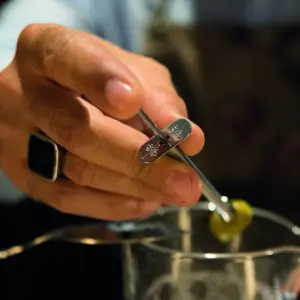
On straight tongs the tip is in line with the forearm, so placing something flat on the rim of a coupe means rotating the wrist. With curved garnish tongs the tool makes the angle: the hand stays in its natural position and the tip arrives already tilted where it is needed. The gain is precision, because a rotated wrist is a less stable wrist, and anyone who has tried to lay a thin twist on a layer of foam knows how much that bit of extra steadiness counts.


Specifications
- Material: stainless steel
- Lengths: 16cm and 21cm
- Shape: curved, with garnish tips
- Use: fruit, twists, flowers, leaves
- Dishwasher safe: hand wash preferred
Which of the two lengths
The 16 is the fine garnish tool: flowers, small leaves, grains, anything laid on a surface rather than into a liquid. The 21 reaches inside a cocktail glass as well and holds a citrus slice or a piece of dehydrated fruit better, because those have weight. Anyone taking only one takes the 21 almost every time, because it covers more cases; anyone working from trays of garnishes prepared in advance keeps the 16 on the twist tray.
Picking up without crushing
The right movement is to close to first contact and stop there, then move. A twist is taken by the edge and not in the middle, a leaf is taken by the stem, and dehydrated fruit is taken flat because it crumbles on the cut. It is the kind of detail you learn in one evening with these tongs, because the position of the hand lets you see what you are doing.
Where they live, and why that counts
Beside the garnish tray, not in the tool drawer. It is a rule about the station more than about hygiene: the garnish goes down at the end, when the drink is already built and the guest is watching, and hunting for the tool at that moment breaks the rhythm of the service. Anyone who works a lot on finishes keeps the garnish tongs resting on a clean cloth along with the cut twists and the selected leaves, so the last movement is one movement and takes two seconds.
Care
Hand wash in warm water with a neutral detergent, and dry straight away: water marks show on polished steel, and on the tip they show from close up. Keep them on a clean cloth beside the garnish tray rather than in the drawer with the heavy tools, because the bend is the part that deforms if something is set down on top of it.
FAQ
What lengths do the garnish tongs come in? Two: 16 and 21 centimetres.
What is the bend for? To bring the tip over the glass without rotating the wrist, so with more steadiness and without blocking the view.
What are they made from? Stainless steel.
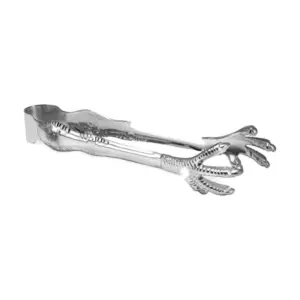
Are they right for ice? No: cubes need the claw tips of a pair of ice tongs.
Can they go in the dishwasher? Better by hand, to keep the polish and to avoid bending the curve under the load.
The more you buy, the less you pay: 4 pieces -5%, 6 -7%, 8 -10%, on the same item.
Dispatched from Rome, Italy. 15-day returns, free of charge. Questions before you order? Message us on WhatsApp on +39 351 929 6937.
The comparison with the other bar tongs is in the tongs category.
Reviews
There are no reviews yet.