
Bar Counters
Back Bar Equipment
Speed behind the bar comes from a station that is set up, not from quicker hands. Here is what lives on the bar top and behind it: the speed rail for the house pours, work bottles for syrups and juices, the garnish station, the mats and the ice scoops. From the scoop to the drop-in module.
28 products selected
-
 Back Bar EquipmentOptions
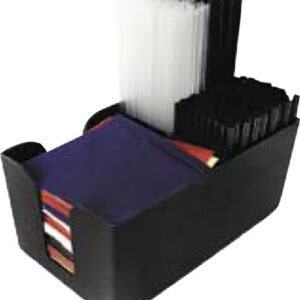
Bar Organiser for Straws and Napkins, Plastic, Black or Fuchsia
Original price was: 11,50 €.9,20 €Current price is: 9,20 €. ex VAT -
 Back Bar EquipmentOptions
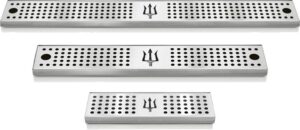
Stainless Steel Bar Mat, Perforated, 300 to 900mm
Price range: 49,90 € through 109,90 € ex VATClear30 cm60 cm90 cm -
Options
-
Add
A bar counter is equipped for movements, not objects
There is one rule, and it holds everything else up: what you use most sits closest. House pour bottles at hip height, ice in the centre, garnishes at the front, consumables at the side. A bar counter set up this way saves steps, and on a busy night the steps saved become covers served.
The three frictions you pay for every night
Looking for the bottle. If gin, vodka and rum are not always in the same place, the hand has to look. That is what the speed rail is for: a fixed order, a grab with your eyes closed. The problem is not one lost second, it is the same second lost two hundred times.
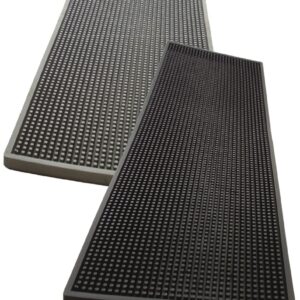
The bar top that floods. Drips from the pourers and condensation from the glasses end up on the working surface, and from there on hands and labels. A mat under the line of pourers catches it before it spreads, and saves you wiping down between drinks.
The consumable that runs out mid-service. Straws, napkins and stirrers vanish without warning when they sit in a single drawer. Split into compartments, you see the level at a glance and restock before the rush, not during it.
The zones, and what goes in them
| Zone | What goes there | Why there |
|---|---|---|
| At hip height | Speed rail with the house pour bottles, working bottles | It is the only zone the hand reaches without moving the body |
| The front, in front of you | Bar mat, garnish station | This is where the drink takes shape, and it must stay dry and tidy |
| At the side | Consumables, scoops, ticket holder | Used often, but not while the drink is being built |
Steel or plastic: here the gap is double
This is the comparison that makes this page useful, because across the range the gap is clear and always the same. For the same job, steel costs about twice as much. It holds for the six-tray garnish station in eco wood or steel, for the 56cm speed rail in ABS or steel, and for the rubber bar mat against the perforated version, where the gap is wider still.
That double is not a mark-up, and it is not always justified either. Steel sanitises thoroughly and carries weight. It pays where the piece works every day and gets inspected: the speed rail full of litre bottles, the garnish station of a high-volume venue. Plastic and eco wood clean quickly and cost half as much, and they are the right choice where the piece stains, gets moved or changes place often. Buying steel for every piece is the neatest way to pay twice for nothing.
I can find it cheaper elsewhere, and what if it breaks
On these pieces a price comparison is quick, because almost all of them are category standards. What changes the sum at the end of the year is not the list price: it is how many times you buy it again. A cheap rubber mat curls at the edges after a few months in the dishwasher, and at that point it slides instead of holding the glass still.
That is why the useful guarantee here is not a sticker, it is continuity. The shapes we stock stay in the catalogue: in eight months you reorder exactly the same piece, without rebuilding the station around a new size. If a line is discontinued, we say so before, not after.
Measure before you order
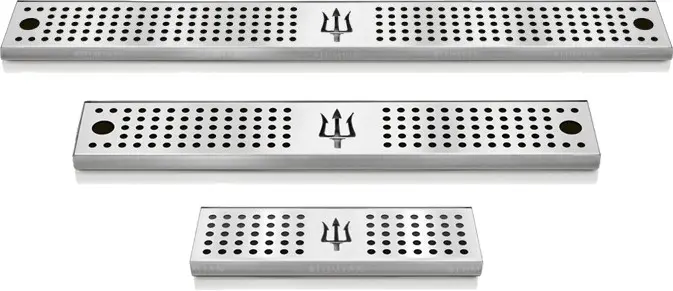
This is the part that sends parcels back, so measure twice. The speed rails in the range are 56, 82 and 85cm: count the bottles that need to fit and check the space under the bar top. Mats go by position, not by taste: the long, narrow strip runs under the line of pourers, the square format sits in front of you where you build the drinks. Garnish trays are chosen by the menu: 3 trays are enough for lime, lemon and olives, 6 are needed when there are also peels, mint and seasonal fruit.
If you need it for the weekend
The stock shown on the product page is the real warehouse stock, and you see it before you order. If what you need is out of stock and service is on Friday, message us on WhatsApp: we will tell you what equivalent is on the shelf instead of making you wait.
Where the station continues
This section covers the bar top. The unit itself is in bar counters, and the built-in ice module is in professional ice wells. The tools that end up in the bartender's hand are in bar tools.
Frequently asked questions
Is steel worth it, or is plastic enough?
Across the range, steel costs about twice as much for the same job, so the right question is where you need it. It pays on a speed rail loaded with litre bottles and on the garnish station of a high-volume venue, because it carries the weight and sanitises thoroughly. On pieces that get moved, stain or change place often, plastic is replaced without a second thought and costs half as much.
What length of speed rail do you need?
Count the house pour bottles and measure the free space under the bar top. The range has 56, 82 and 85cm: the short one is for small stations or as an extra rail, the long ones for the main station. Many bars fit two, one for spirits and one for mixers.
How many garnish trays do you need?
3 trays cover lime, lemon and olives, which is a short menu. 6 are needed when there are also peels, mint and seasonal fruit. One compartment too many is better than one too few: kept apart, the aromas do not mix and the lemon does not taste of mint.
What size of bar mat should you get?
Choose it by position. The long, narrow strip runs under the line of pourers and catches the drips; the square format sits in front of you, where the drinks take shape. Two mats with different jobs keep the bar top drier than one large one.
Where do you start when equipping a station from scratch?
With the speed rail and the bar mat, because they are the two pieces that change the pace straight away. Then the garnish station, which removes the slowest movement in service. Consumables and scoops come later: you need them, but they are not what costs you seconds while you build the drink.
Can't find what you need?
Tell me what you are looking for