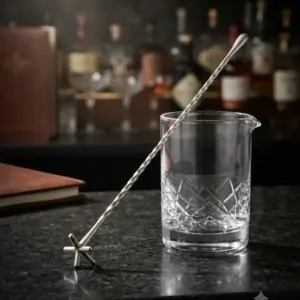
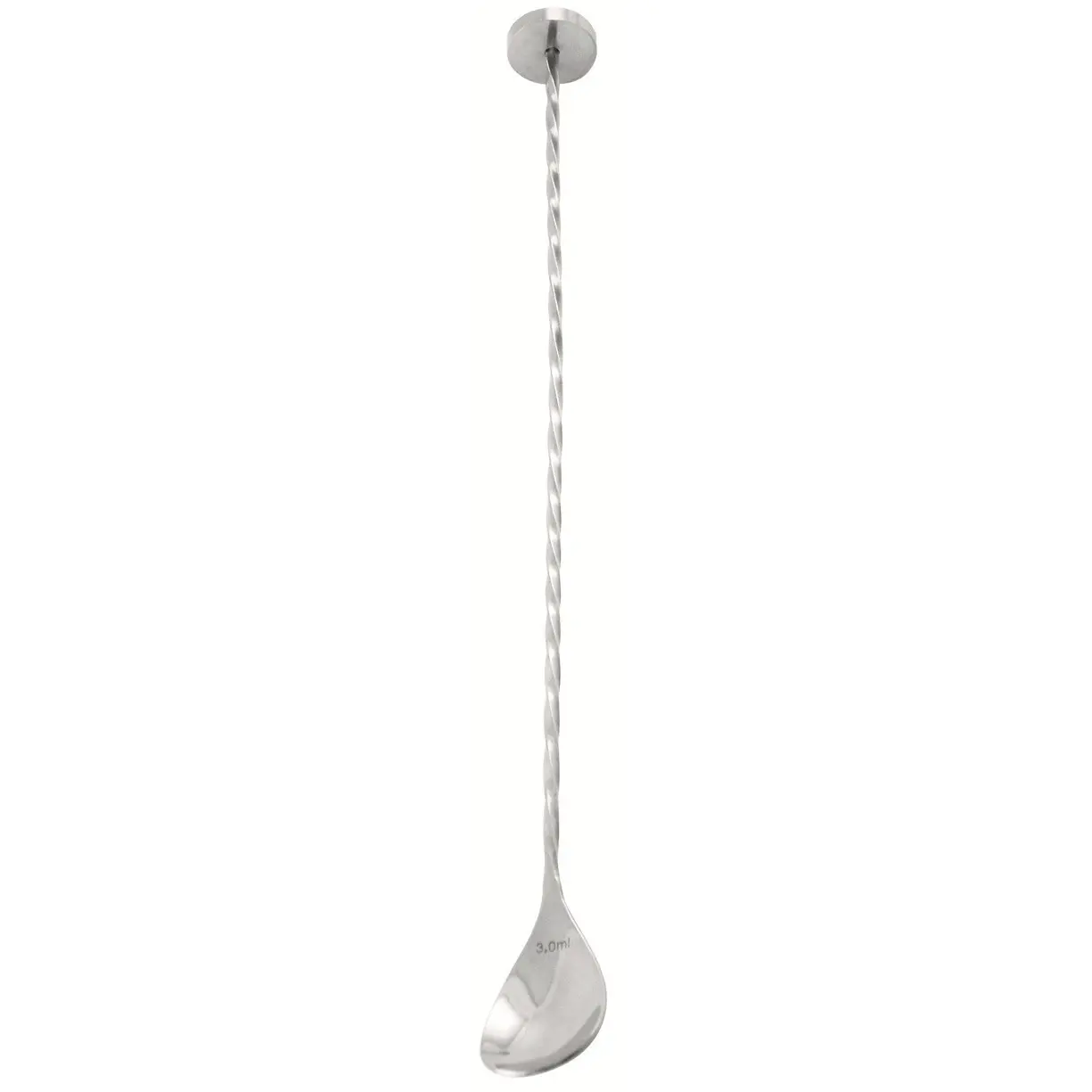
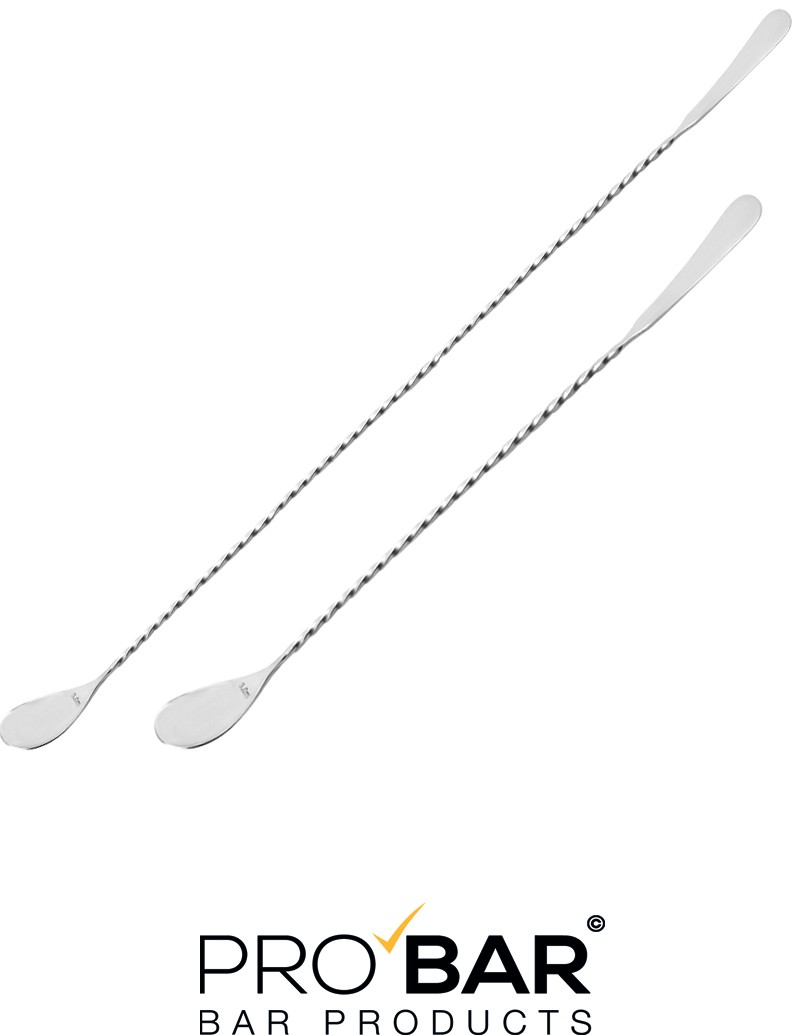
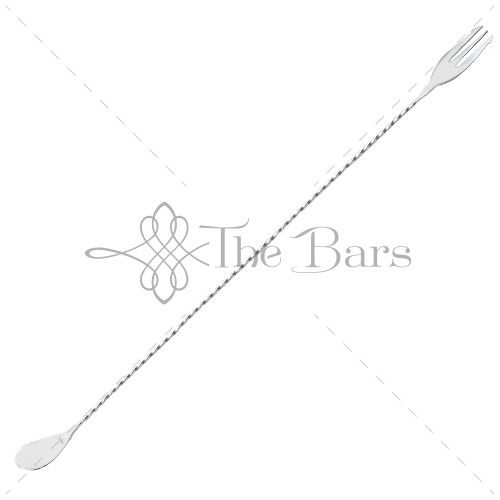
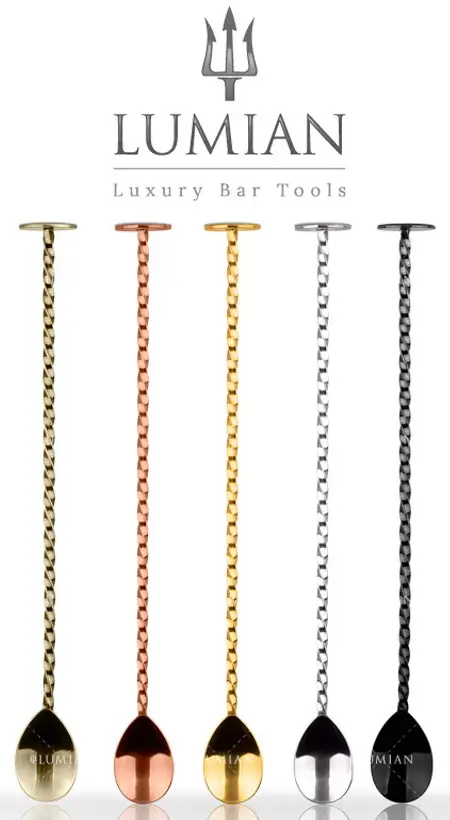
The bar spoon is the extension of the hand inside the mixing glass. A twisted shaft turns it up the wall of the glass with no effort, and the ends change with the job: teardrop to press and layer, trident to pick up the garnish, muddler built into the handle. Here are the lengths that suit each glass, in stainless steel. Below, the guide to choosing one.
It looks like the simplest tool on the station, yet it separates a clean stir from a noisy clatter of ice. The bar spoon stirs drinks round the wall of the mixing glass in one smooth movement, layers, and fishes a cherry from the bottom of a jar. A good bar spoon changes the movement, and guests see the movement.
The twisted shaft has a job
The twist along the shaft lets the fingers slide and guides the rotation. You stir by turning the shaft between thumb and forefinger, not by moving the whole arm, and the spoon follows the wall of the glass at a steady pace. With a smooth shaft the same movement is awkward and the bowl knocks the ice. With the twist it is continuous and quiet.
Choose the length by the glass
A spoon that is too short puts your fingers in the drink. The right length reaches the bottom of the mixing glass with the grip high and dry. The standard 30cm suits most glasses, but a tall 700ml mixing glass needs 40 or 45cm. If you often work in tall vessels, make the long size your reference.
The end shows the trade
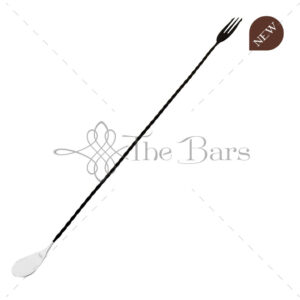
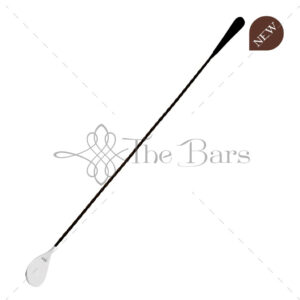
The opposite end of the spoon is a second tool. A teardrop or disc end presses gently and is used for layering: you pour over the back of the spoon to set one layer on another. A trident fork spears olives and cherries without wet fingers and places the garnish. Some models have a small muddler built in.
End
What it does
Teardrop / disc
Light pressing, layering
Trident / fork
Picking up and placing the garnish
Built-in muddler
One tool to stir and press
Pieces to put on show
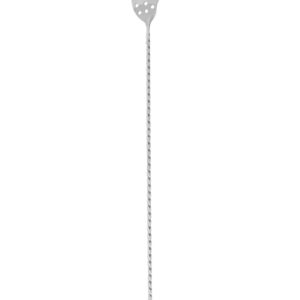
The Hoffman Bar Spoon 45cm is the long size for tall mixing glasses: the twist runs through the fingers and the grip stays dry at the bottom of the glass.
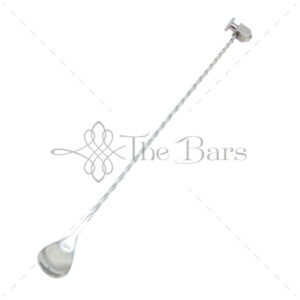
The Lumian Bar Spoon with Muddler combines spoon and muddler: one tool in the hand to stir and press, useful when space behind the bar is tight.
The bar spoon sits next to the mixing glass and the jigger. For pressing herbs and fruit in quantity, a proper muddler does the job better.
Frequently asked questions
Why does a bar spoon have a twisted shaft?
The twist lets the fingers slide and guides the rotation: you turn the shaft between thumb and forefinger, so the spoon follows the wall of the mixing glass smoothly and quietly, without knocking the ice.
What length of bar spoon should I choose?
The standard 30cm suits most glasses; a tall 700ml mixing glass needs 40 or 45cm. The right length reaches the bottom with the grip high and dry.
What is the trident or fork end of a bar spoon for?
It picks up olives and cherries and places the garnish in the glass without touching it, which keeps service clean.
What is the teardrop or disc end for?
It presses gently and, above all, it is used for layering: pour a liquid over the back of the spoon and it settles as a separate layer, the technique behind multi-layered drinks.
What is the difference between a bar spoon and a muddler?
The bar spoon stirs and, with the right end, presses lightly. To crush herbs, citrus and fruit in quantity, as in a Mojito, you need a proper muddler with a wider, heavier head.

 Bar SpoonsOptions
 Bar SpoonsAdd
 Bar SpoonsOptions
 Bar SpoonsAdd
 Bar SpoonsAdd
 Bar SpoonsAdd
 Bar SpoonsAdd