
Bar Tools
Cocktail Shakers
The Boston is two parts, tin and small tin, with no strainer inside: it is the fastest and the easiest to replace, because the tins are sold singly. The cobbler has the strainer built in and suits a team that changes often. The Parisienne is all metal, for service in front of the guest. Across the three families almost everything here is 18/10 stainless steel.
32 products selected
-
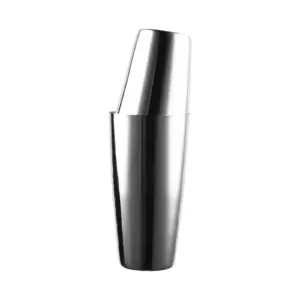 Cocktail ShakersAdd
Boston Shaker Luxury 28oz & 20oz Tin Set, Weighted, Mirror Finish
Original price was: 17,00 €.13,60 €Current price is: 13,60 €. ex VAT -
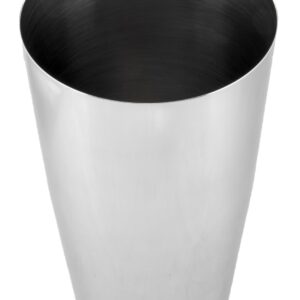 Cocktail ShakersAdd
Boston Shaker Tin 28oz, Weighted, 18/10 Stainless Steel
Original price was: 8,90 €.6,68 €Current price is: 6,68 €. ex VAT -
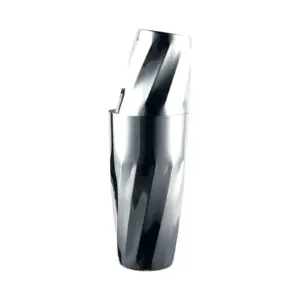 Cocktail ShakersAdd
Boston Shaker Twist 28oz & 20oz Tin Set, Weighted, Mirror Finish
Original price was: 27,00 €.21,60 €Current price is: 21,60 €. ex VAT -
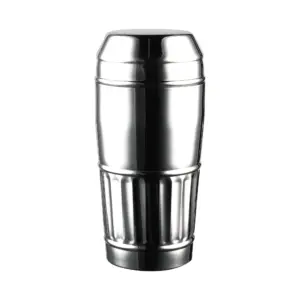 Cocktail ShakersAdd
Cocktail Shaker Deco Coffee 900ml, Three-Piece Cobbler, Stainless Steel
Original price was: 18,50 €.14,80 €Current price is: 14,80 €. ex VAT -
 Cocktail ShakersAdd
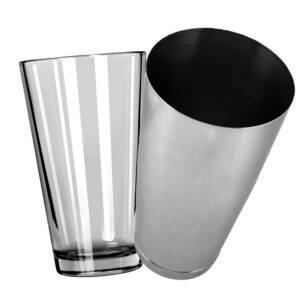
Mixing Glass and Boston Shaker Set, Glass and Polished Stainless Steel
Original price was: 11,30 €.10,17 €Current price is: 10,17 €. ex VAT -
 Cocktail ShakersAdd
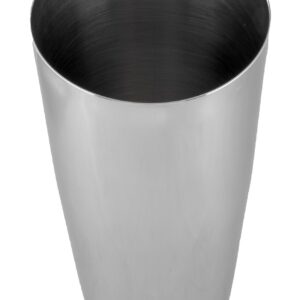
Boston Shaker Tin 28oz, 18/10 Stainless Steel
Original price was: 8,40 €.5,88 €Current price is: 5,88 €. ex VAT -
Add
-
 BronzeOptions
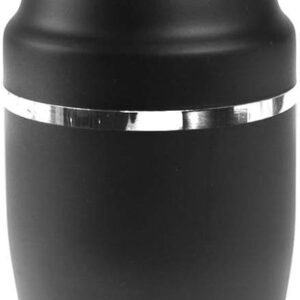
Parisienne Shaker 550ml Chrono Lumian, 18/10 Stainless Steel, 5 Finishes
Price range: 19,90 € through 25,90 € ex VAT

Cocktail shakers: which one holds up in the rush
The real question is not which shaker is best. It is which one keeps pace with the team you have. A bar doing 200 covers on a Saturday and one making twenty careful drinks a night need two different tools. The difference does not show on the shelf. It shows at eleven at night, when the seal gives or two tins lock together while the queue grows.
The three problems that decide the choice
The seal that gives. A thin tin deforms at the first knock on the edge of the bar top, and from then on it seals badly. It leaks during the shake and has you wiping the bar top between drinks. Models described as weighted have a thicker wall at the base: heavier in the hand, and they stay round.
The two tins that lock. With a Boston it happens when the tin is too thin and the metal pulls in. You free it with a slap on the side, which by the fourth Daiquiri in a row is the difference between serving and stopping. A well-made 18oz and 28oz pair opens with one sharp tap of the palm.
The part you can no longer find. It is the problem nobody mentions, and you pay for it months later. A cobbler is one unit: dent the cap and the shaker is finished. A Boston is not, because the large tin and the small tin are sold singly, and the range has them outside the set too.
The three families, and who they really suit
| Family | How it works | Where it fits |
|---|---|---|
| Boston, large tin plus small tin | Two parts, no built-in strainer. Needs a separate strainer | High volumes, trained team, and wherever replacing one part matters |
| Cobbler, three parts | Strainer and cap built in, one movement | Hotels, events, seasonal staff who change often |
| Parisienne or French | Two parts, all metal, no glass | Service in front of the guest, and anywhere broken glass is a problem |
In the range the three families are not equal: 14 Boston lines, 8 Parisienne and 7 cobbler. It is not a quality ranking: it reflects how the range has followed what customers ask us for.
The same tin costs less elsewhere
It happens, and it is better to say so. A cheap Boston exists and works, as long as the metal is right. The difference is the thickness of the base, and it shows at the first knock on the bar top: the thin tin goes oval and from then on seals badly. At that point you saved once and you are losing a few seconds on every drink, all season. If you compare two prices, look for the word weighted: that is what separates the two, not the brand.
What a mistake costs, and what the fix costs
It is the question that usually has no written answer anywhere, so we put it here. A single replacement tin costs a fraction of a full Boston set. So the day you dent one, you do not buy the set again: you buy the part. A cobbler offers no such route, and that is the main reason a high-turnover bar ends up on the Boston even when it starts with the cobbler.
If you need it for the weekend
The stock on the product page is the real figure, taken from the warehouse: if a model is sold out, you see it before you order, not after. If what you need is out of stock and service is on Friday, message us on WhatsApp: we tell you what equivalent is on the shelf, without waiting for a reply to a contact form.
How it fits with the rest of the station
If you choose a Boston you also need a strainer, because it has none built in: the Hawthorne to strain from the tin, and the fine strainer if you fine strain (double strain). The rest of the mixing core is the jigger to measure, the mixing glass for stirred drinks and the bar spoon.
Frequently asked questions
Boston or cobbler for a busy bar?
Boston, for two reasons you feel in service. It opens and closes faster, because there is no cap to put back. And when a tin is dented you replace only that part, not the whole shaker. The cobbler suits venues where staff change often and not everyone can use a separate strainer.
Can I buy a tin on its own?
Yes, and it is the practical reason many bars stay with the Boston. The range has large and small tins outside the set, for a fraction of the price of a full set. A cobbler is a single unit, so there is no replacement part.
What difference does a weighted tin make?
It has a thicker wall at the base, so it is heavier in the hand and keeps its shape. In practice the seal holds for the whole service and the rim does not deform when you knock it on the bar top. A thin tin costs less and dents sooner, and from then on it seals badly and costs you time on every drink.
Why the 18oz and 28oz pair?
They are the two sizes that lock at the right angle: the 18oz small tin sits in the 28oz large tin with enough grip left to open it with a tap of the palm. It is the most common pairing behind the bar and you find it on most Boston sets in the range.
Which steel, and how do you wash it?
18/10 stainless steel, which you can tell at the bar even after several seasons: it does not cloud in patches when it meets lemon juice or bitters. Coloured finishes are external plating and should be washed by hand, because industrial dishwasher cycles mark them for good.
Can't find what you need?
Tell me what you are looking for